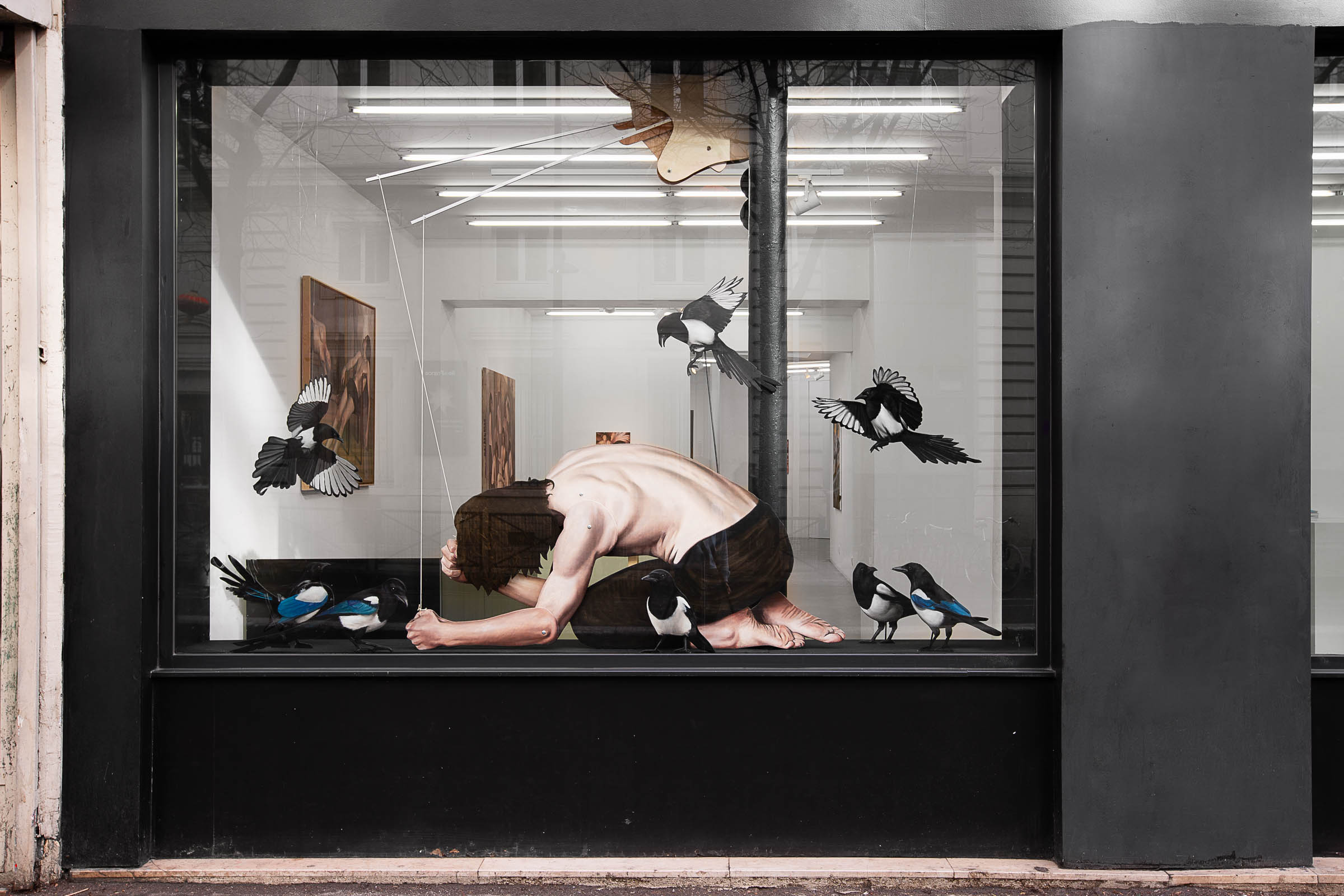
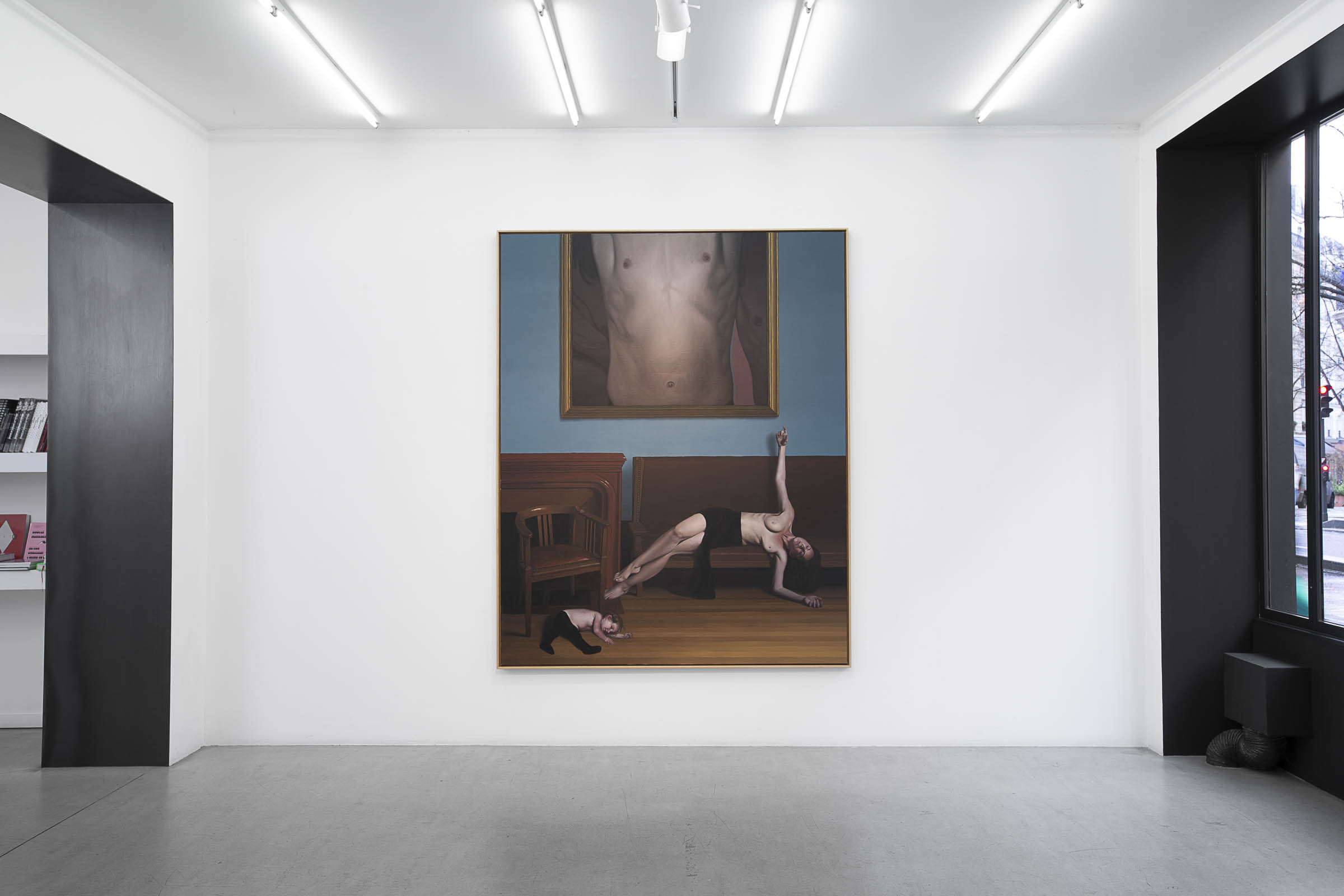
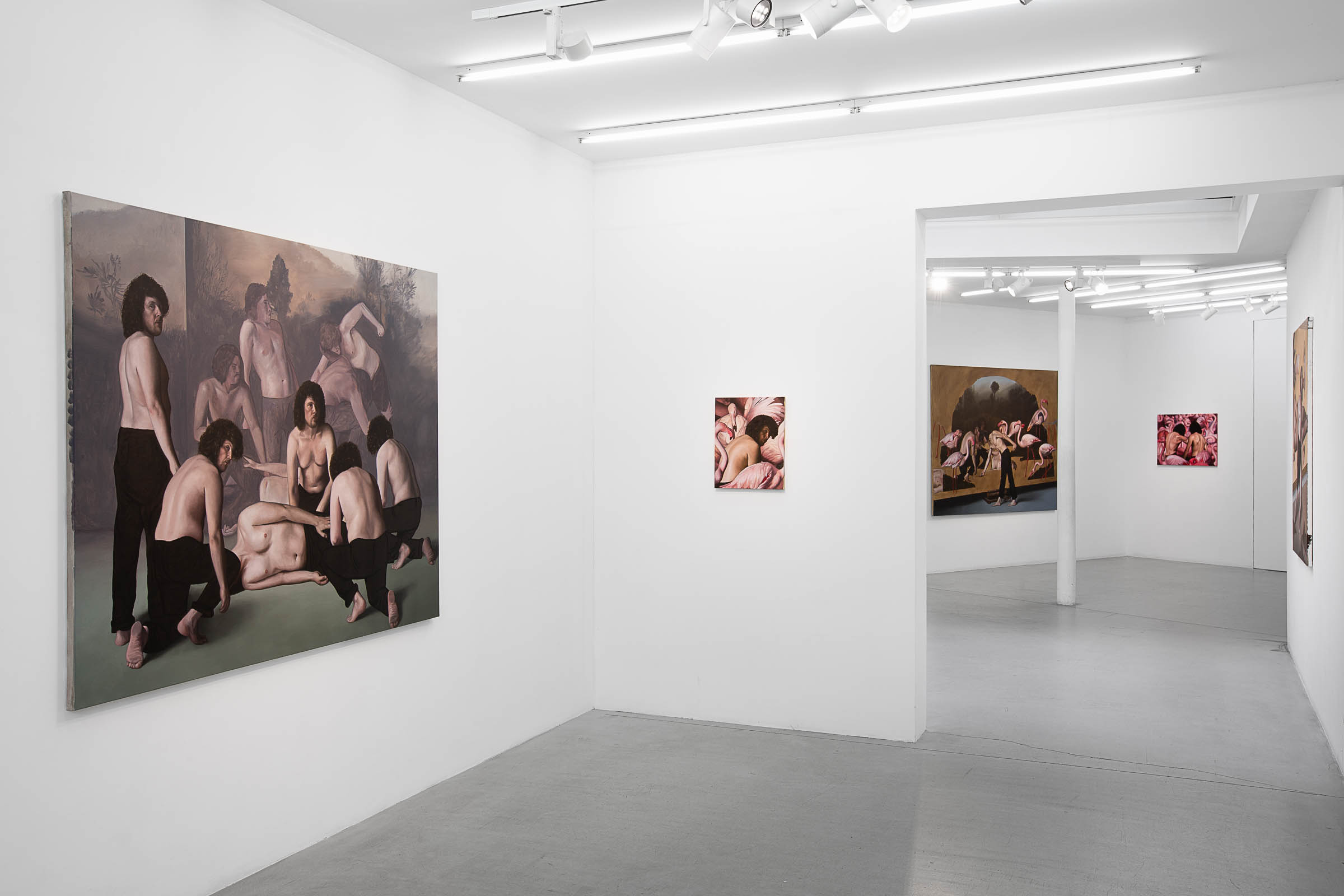
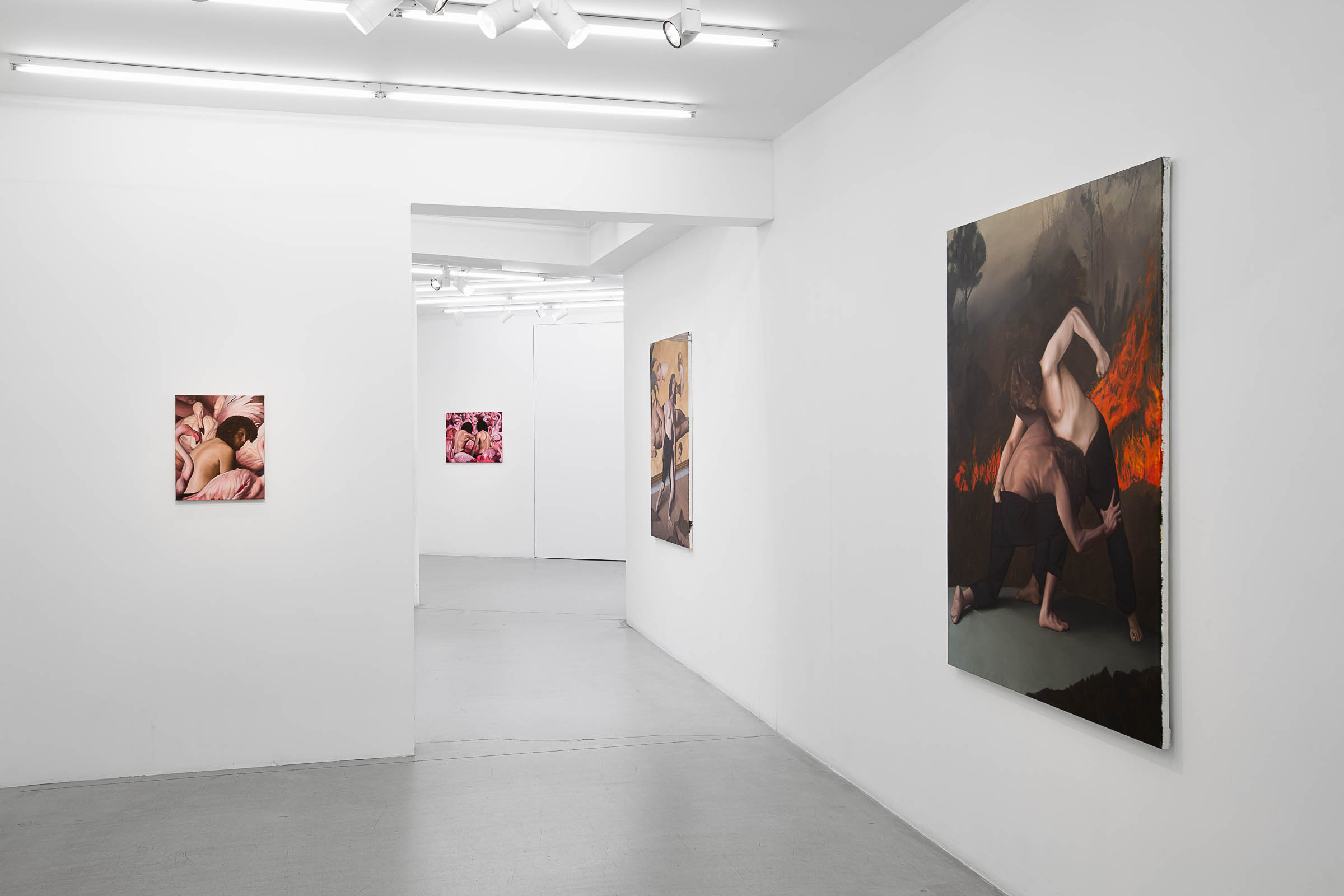
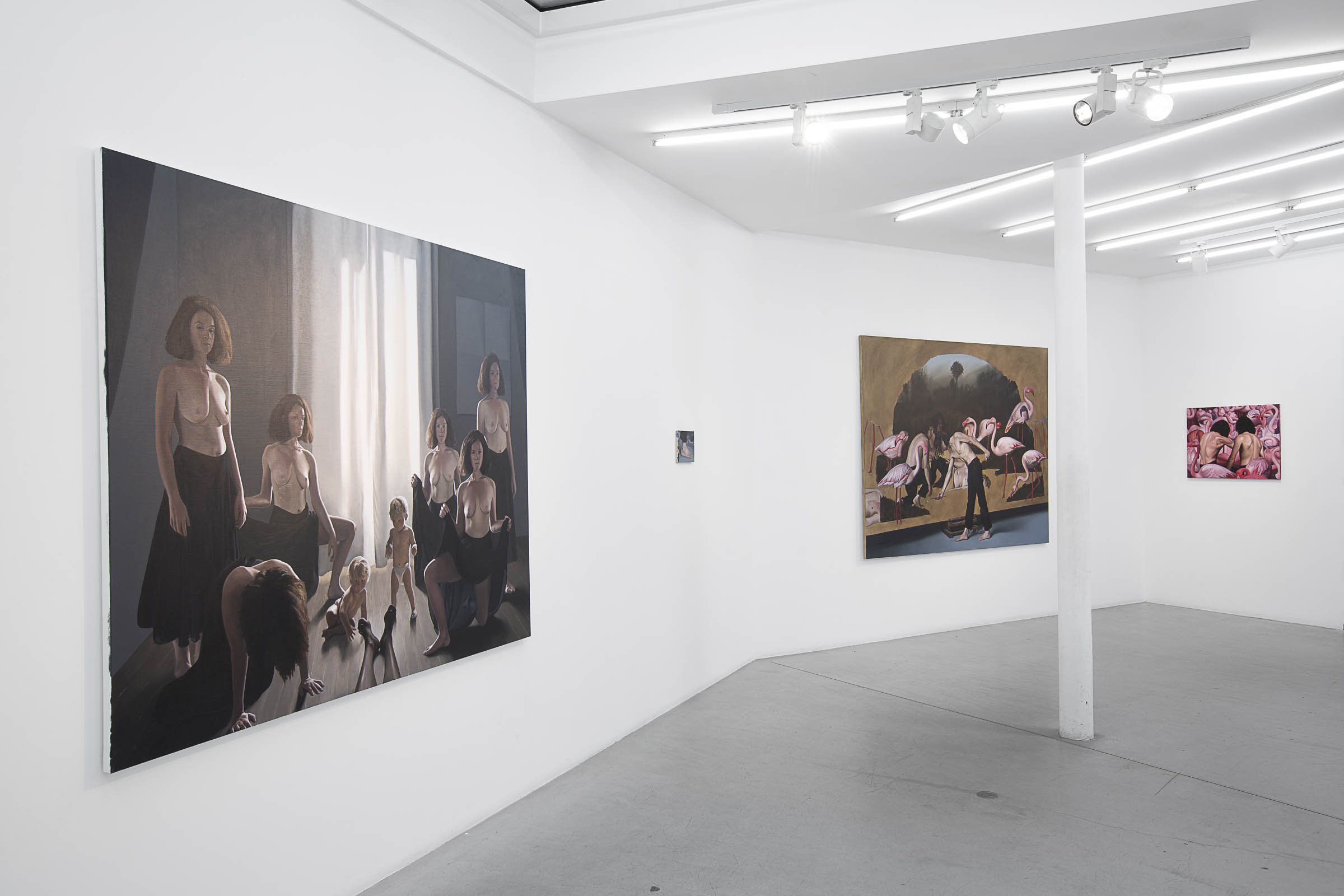
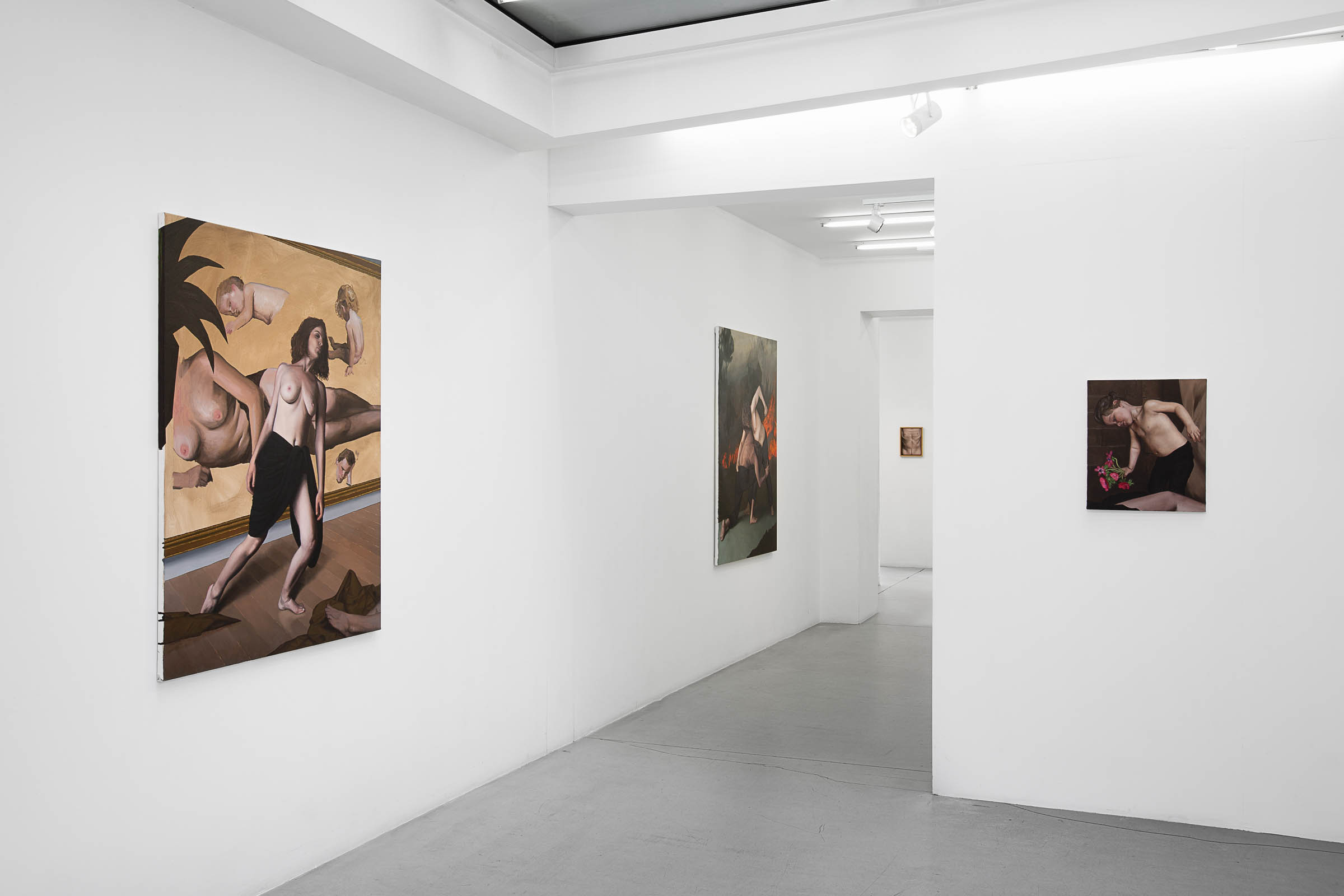
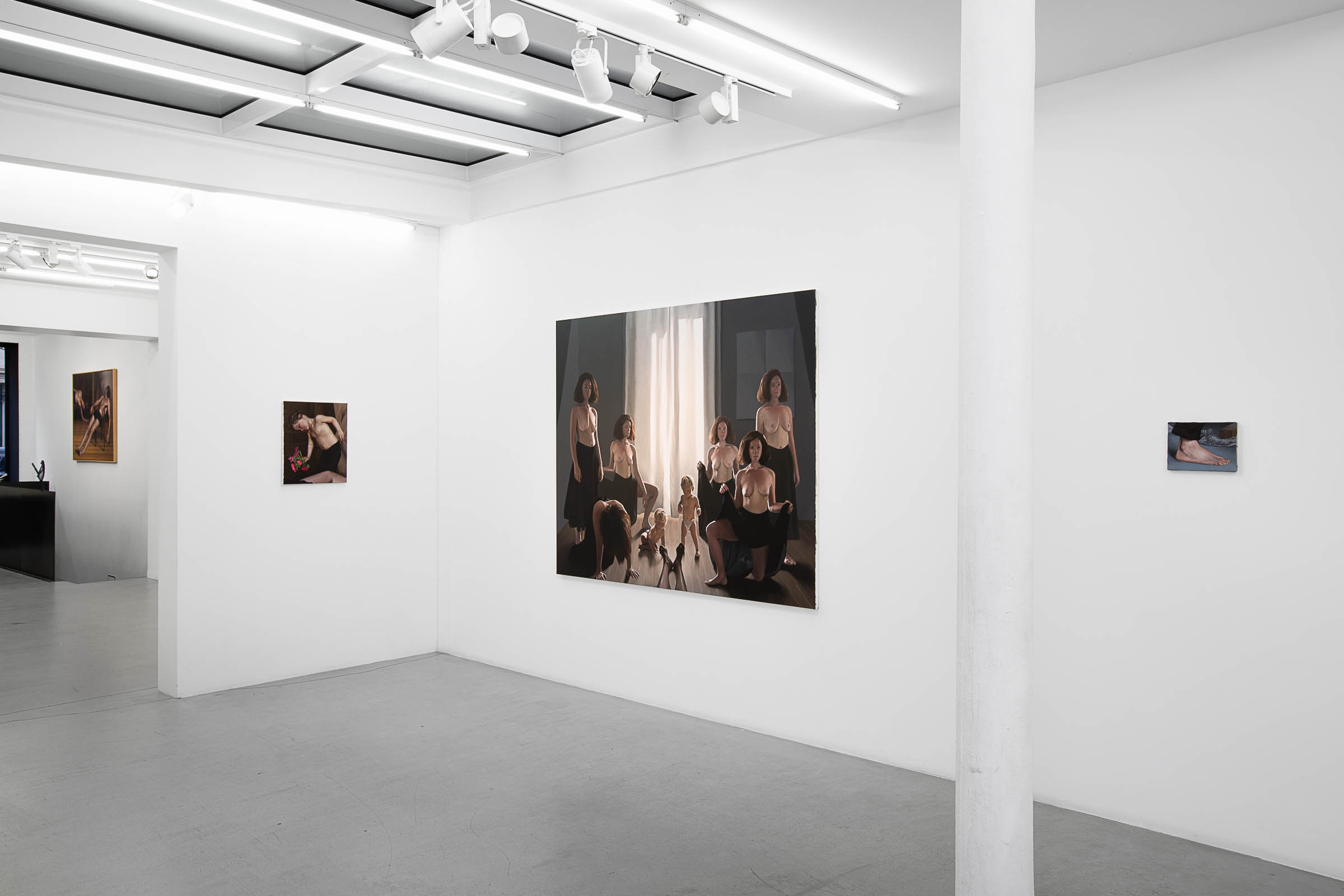
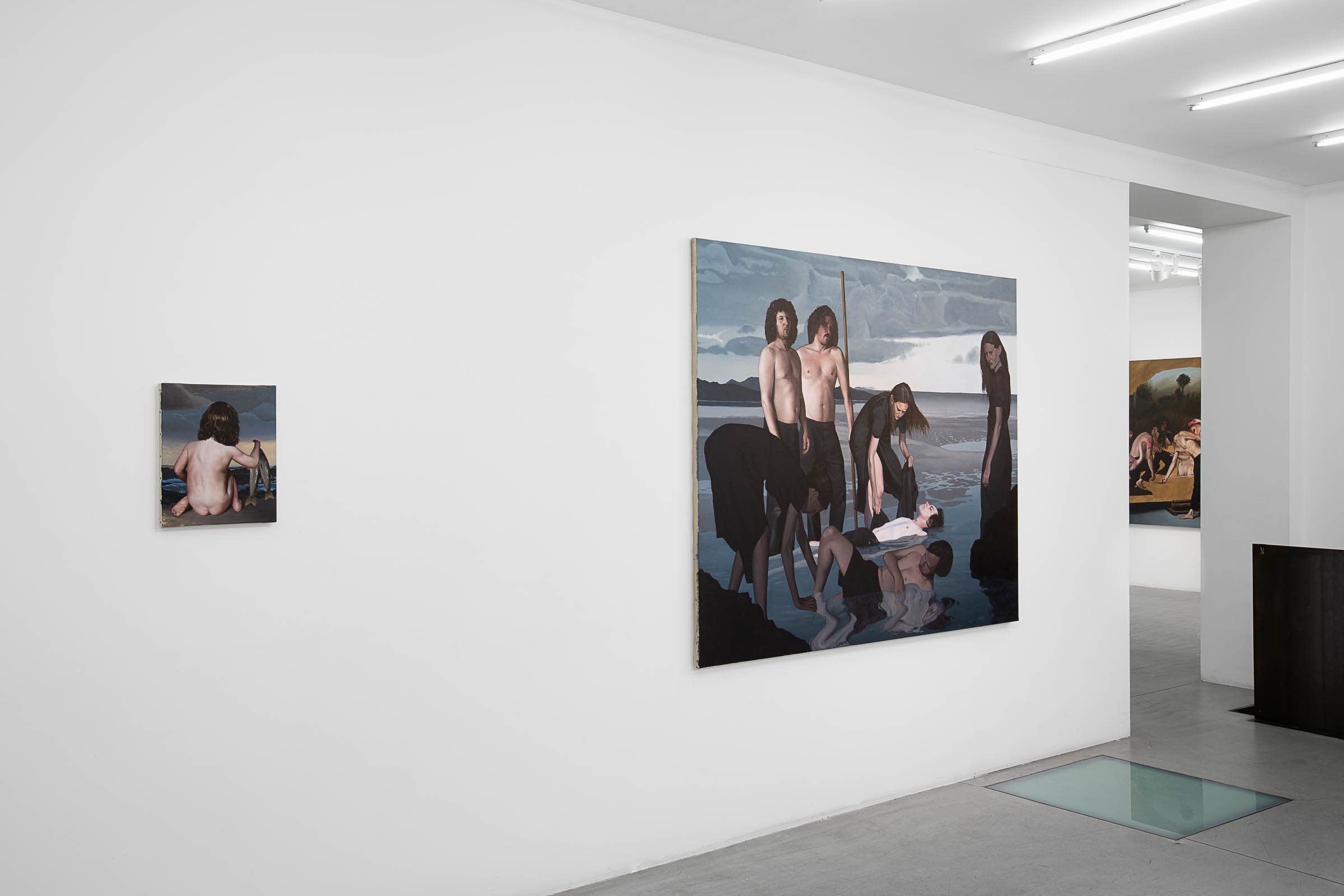
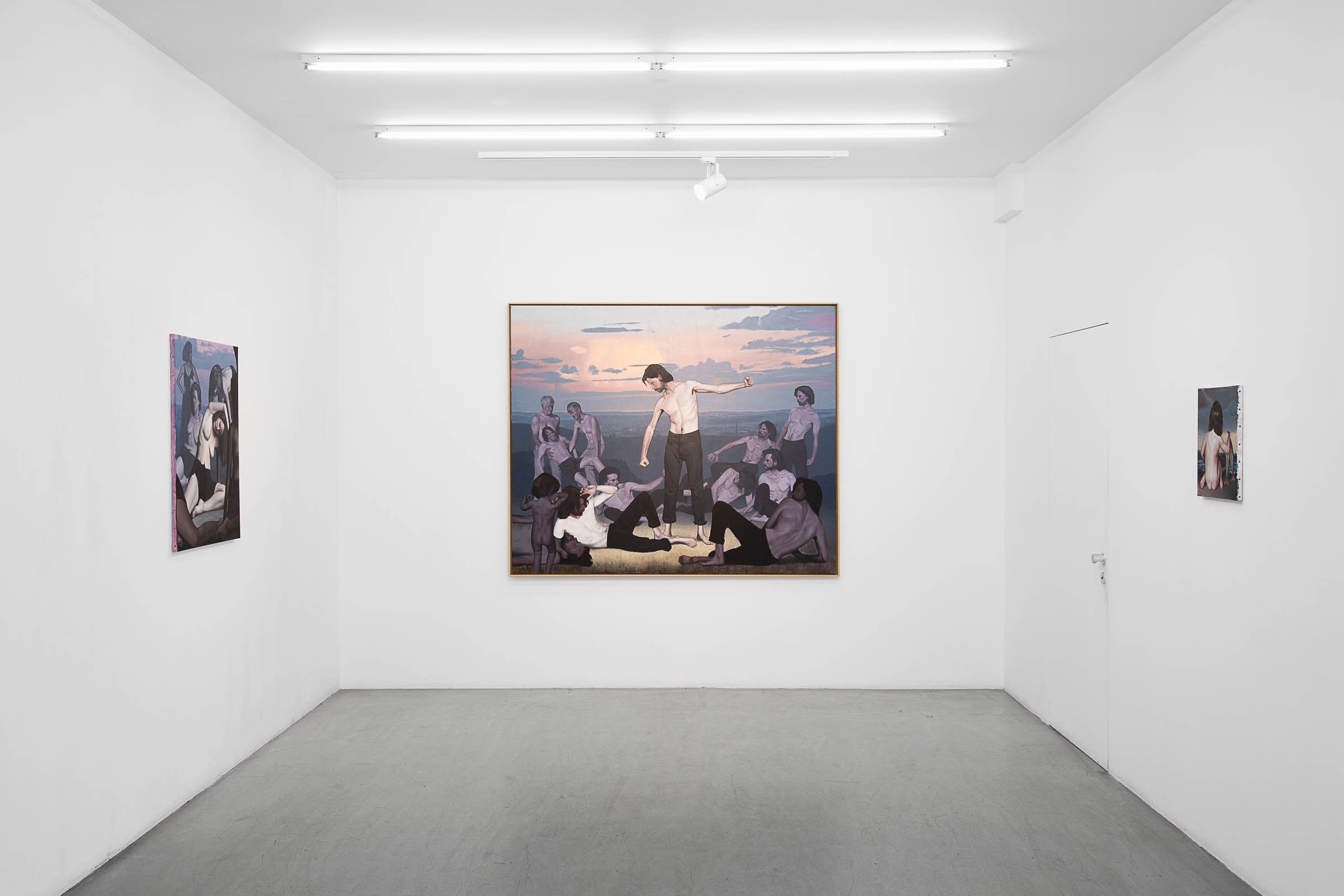
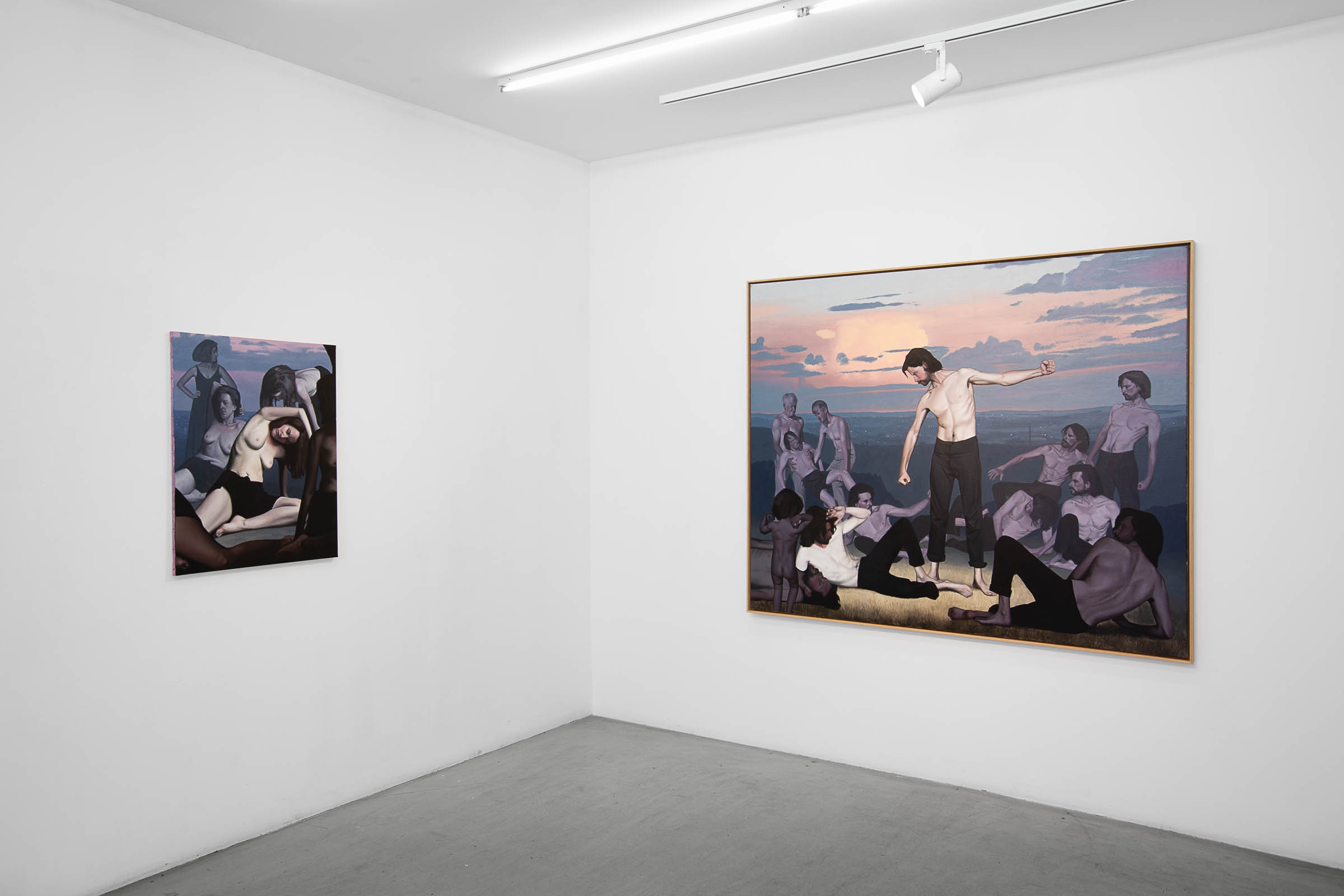
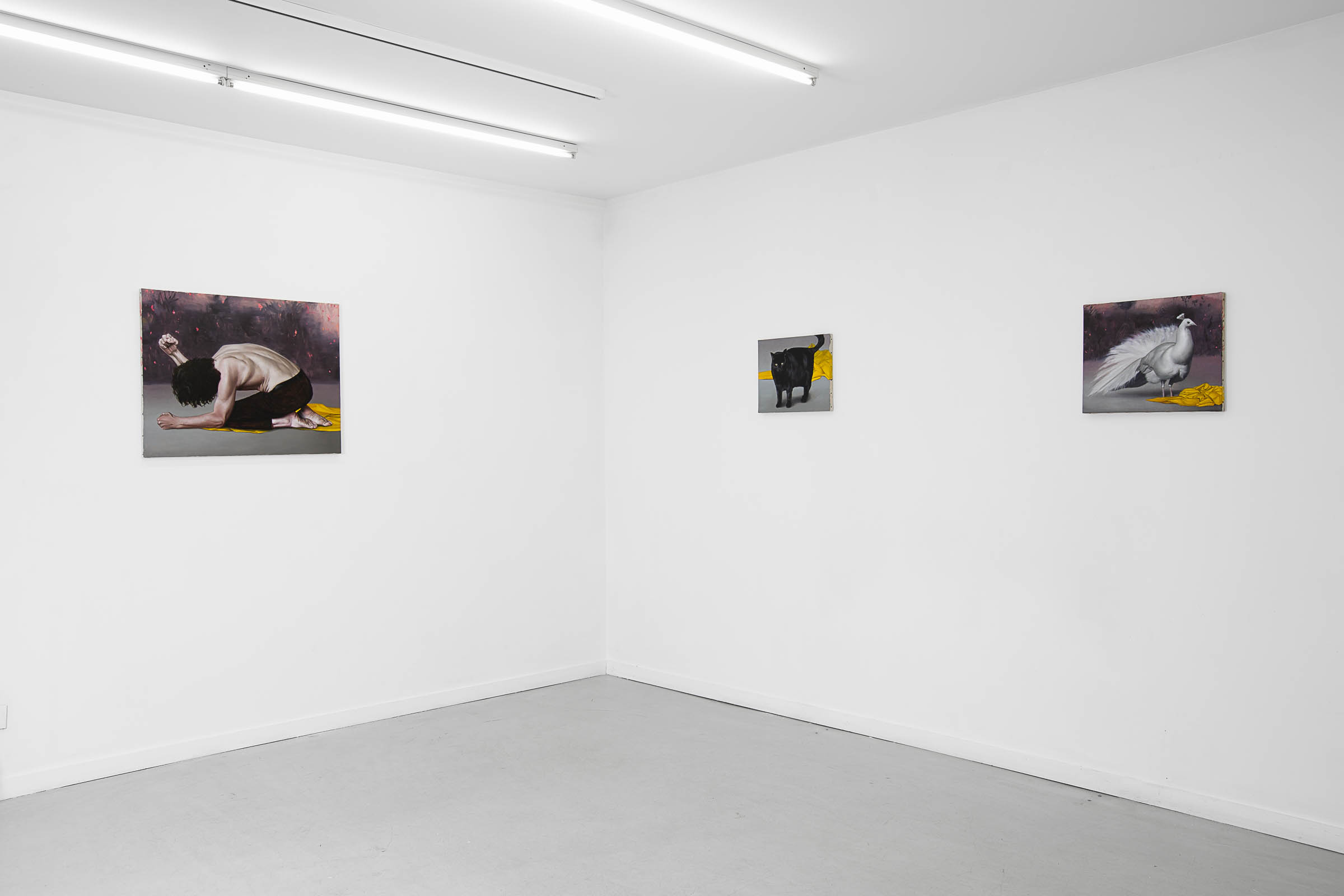
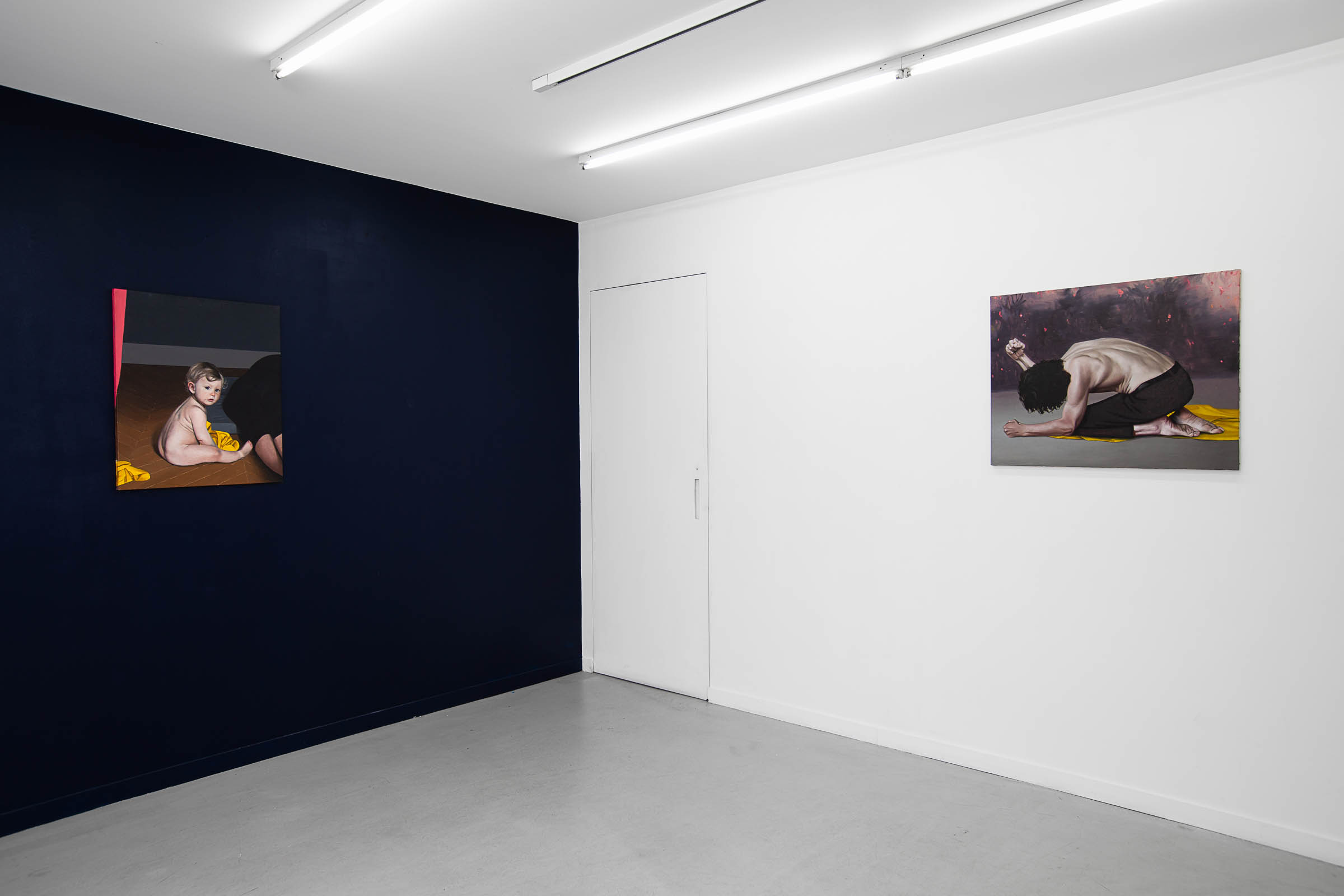
François Malingrëy’s work takes the human body as its primary stage. In a taut hyperrealism, exposed flesh becomes the arena where ancestral passions are replayed: desire and guilt, gentleness and violence, brotherhood and rivalry. Anchored in an apparently ordinary setting, these scenes are traversed by an intensity that verges on the liturgical. Reality expands into something grand, as if the figures were caught mid-aria, at the very moment when intimate drama takes on an almost mystical dimension. From canvas to canvas, Malingrëy composes silent choreographies. His paintings are freeze-frames in the dramaturgy of bodies, where the memory of Old Master painting collides with the great frescoes of opera: space, gestures, and gazes are orchestrated with meticulous staging; light carves the volumes in a tense chiaroscuro, while certain backgrounds remain intentionally blurred, like sets barely erected.
His large group scenes follow the same logic: awkward lifts, falls, struggles, and ambiguous embraces form a score of gestures in which everything seems both held back and ready to tip over. In these tight compositions, a small number of figures endlessly replay, in a naturalistic setting, the same motifs of conflict, attachment, wounded loyalty, or jealousy, variations on the great human sagas that run through history, from the Passion of Christ to the myth of Abel and Cain, and more broadly all those stories in which the family becomes the theater of fate. The quotations scattered through Malingrëy’s painting are never literal. They function as a parallel montage between the history of painting and our contemporary visual world.
The misty distances, worked in sfumato, evoke Italian painting of the 15th–17th centuries. Certain poses, outstretched bodies, open torsos, open arms, reactivate the gravity of Christ-like figures, from Rogier van der Weyden to Velázquez, all the way to the exposed body of the assassinated Marat. The lighting borrows from the provocative naturalism of the great Baroque masters:taut chiaroscuro, highly legible gestures, diagonal tensions charging each scene with lyrical intensity. The everyday becomes merely a backdrop for an ancient iconography that resurfaces, displaced and replayed, like a myth that keeps returning in new forms. The dramaturgy also includes the viewer: positioned at the edge of the stage, at the height of torsos and faces, the viewer is drawn inside the frame, while part of the action remains off-screen, in the “before” and “after” that one senses beyond the image.
The presence of the painter can sometimes be detected as a self-portrait or a discreet guiding figure among the others. This nod to the tradition of masters who slipped themselves into their own works anchors his practice within the long history of painting, and reminds us that a conscious eye is at work, shaping the light, arranging the bodies, and holding the thread of the narrative, close to what is unfolding within the frame. In this way, François Malingrëy’s painting turns each canvas into an open stage where the present of the bodies and the memory of painting are replayed together, like layered voices in a liturgical score whose choir he conducts in silence.