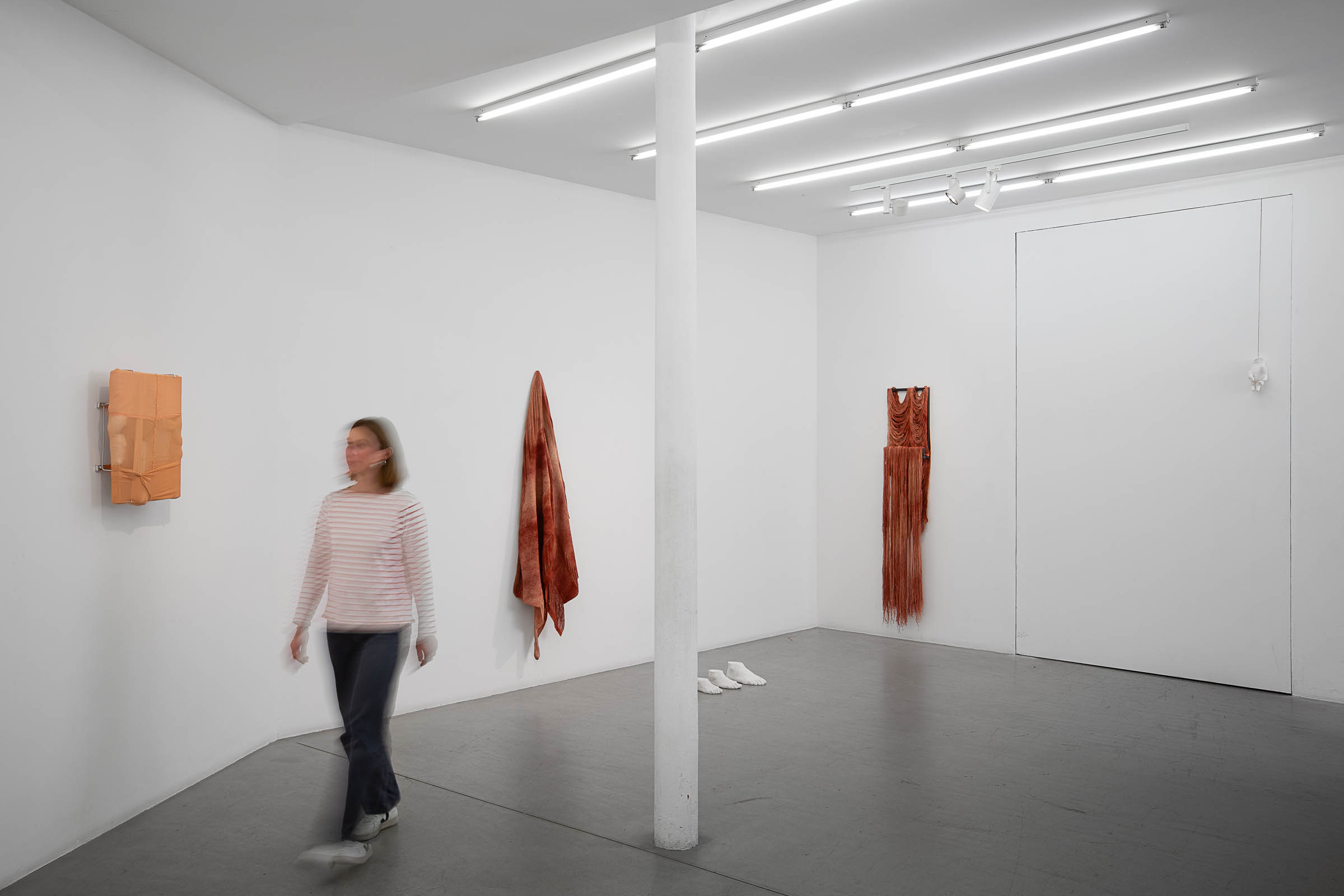
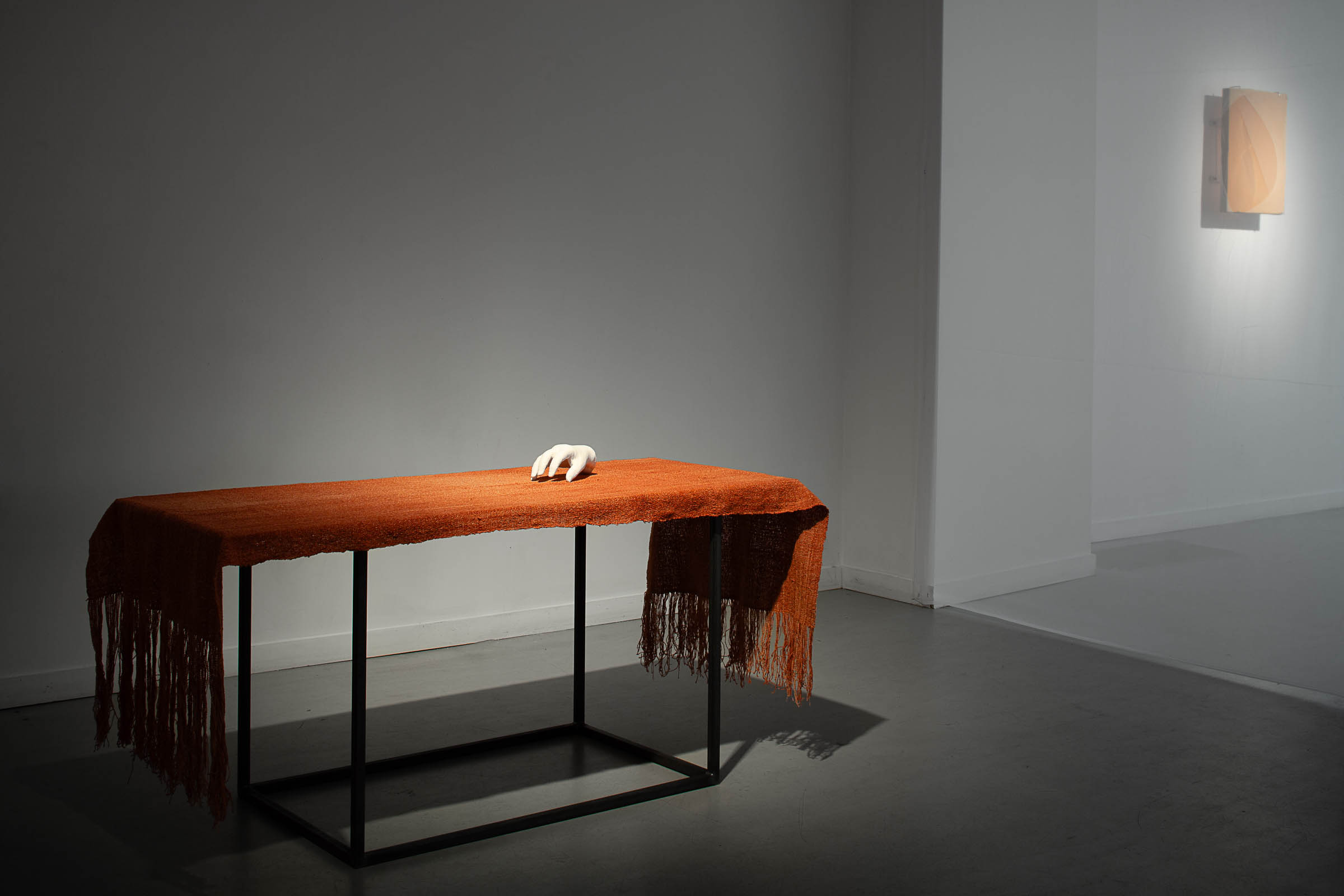
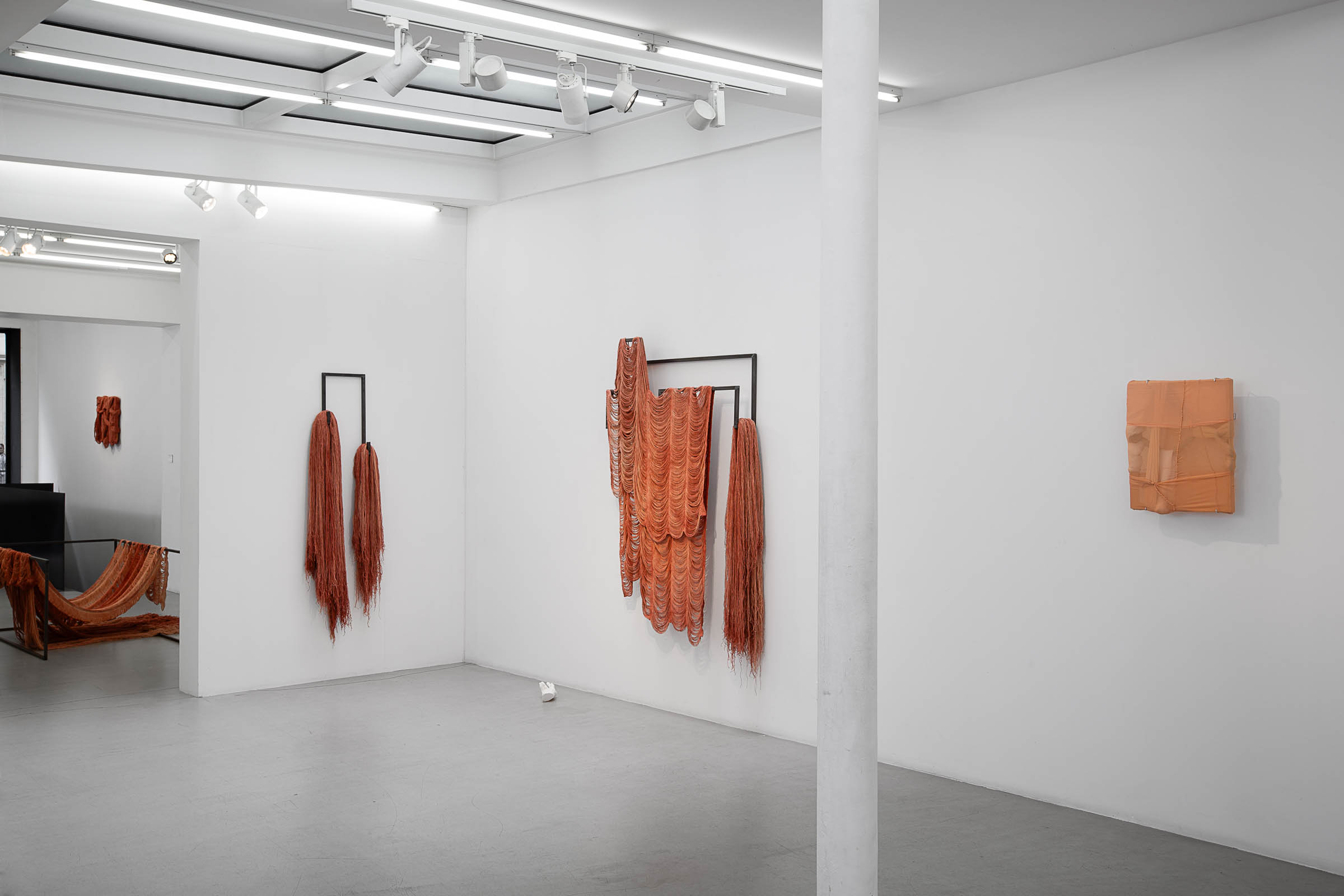
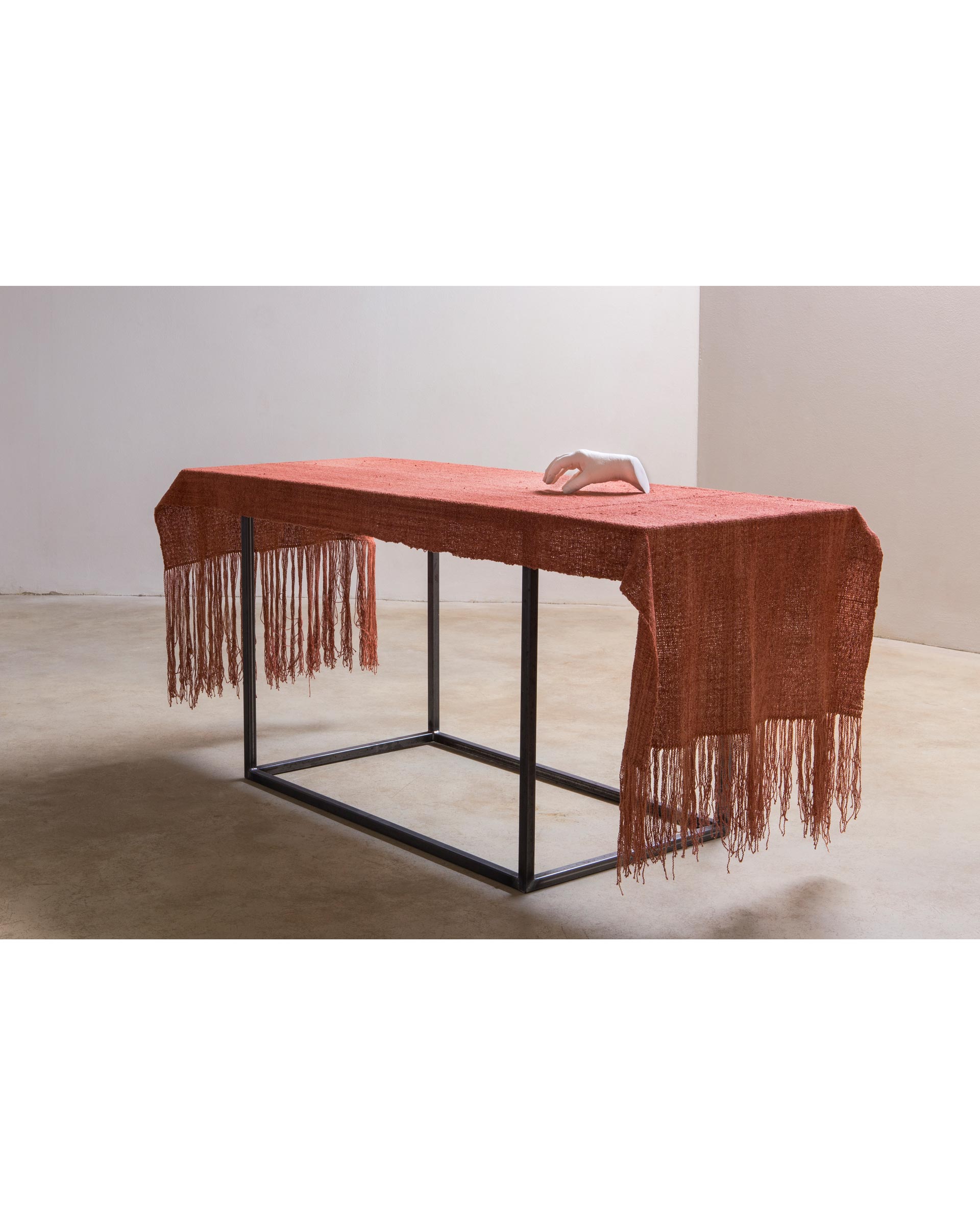
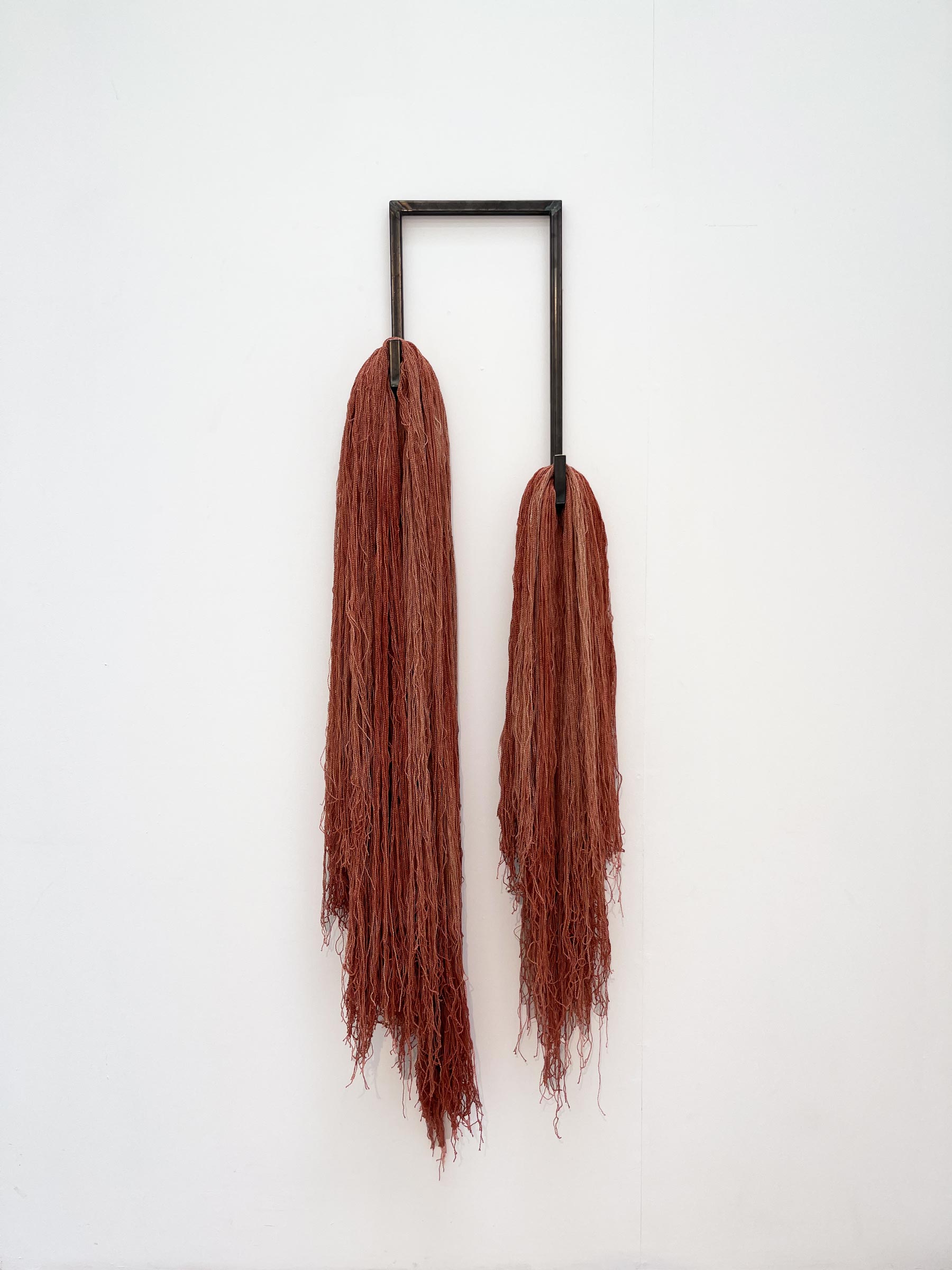
PARIS-B is pleased to announce a solo exhibition by Franco-Iranian artist Golnaz Payani. Bringing together a series of monumental textile works, À effleurer, se rompre, explores the persistence of memory through the disappearance of matter.
Golnaz Payani has now drifted into an epidermal realm, where the hands of the sculptor, the surgeon, and the embalmer become one. — Morad Montazami
By inhabiting a space where disappearance and presence coincide, Golnaz Payani transforms the vulnerability of matter into a gesture of silent resistance.
Through À effleurer, se rompre, the artist succeeds in materializing the impalpable, turning void into volume and silence into speech.
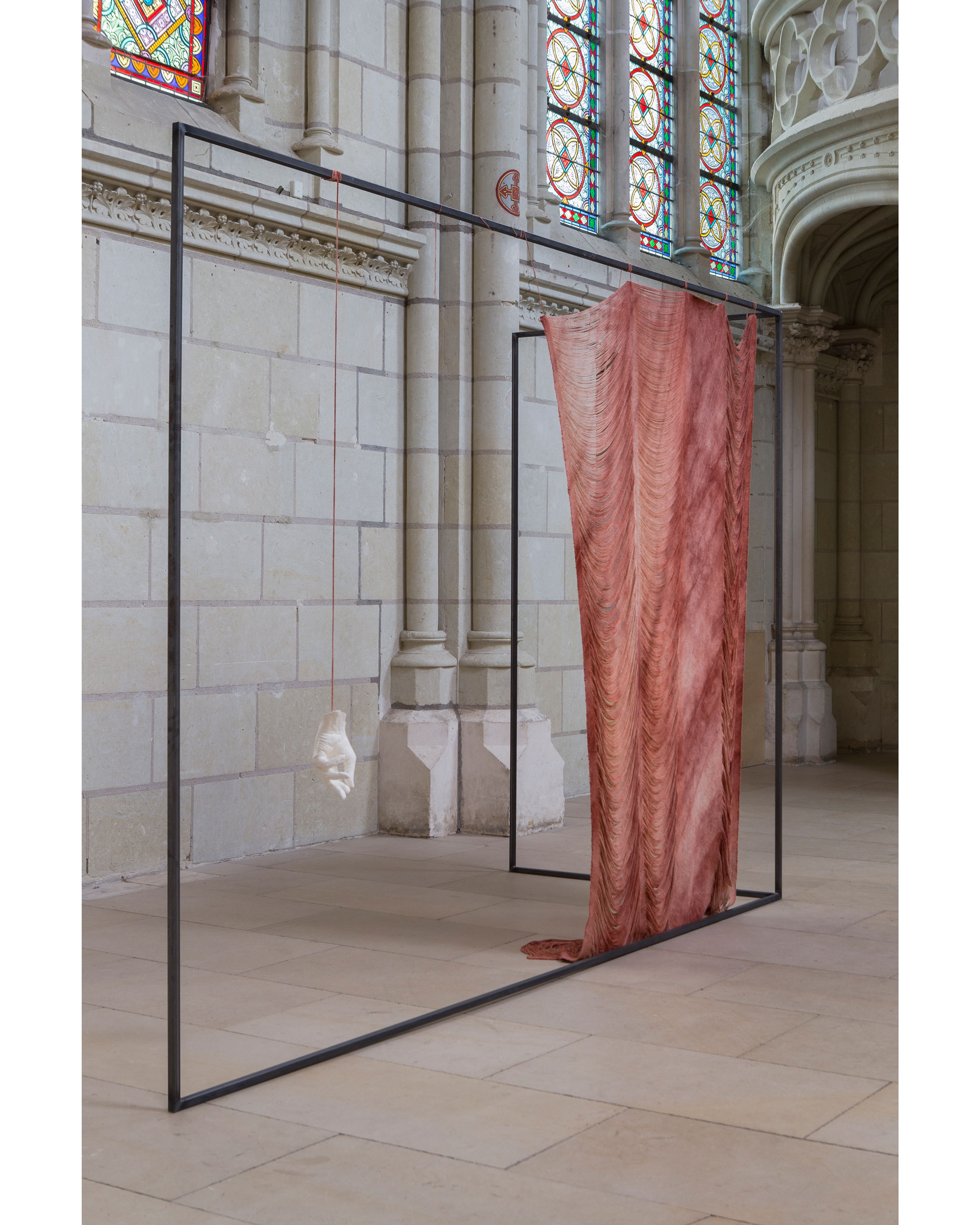
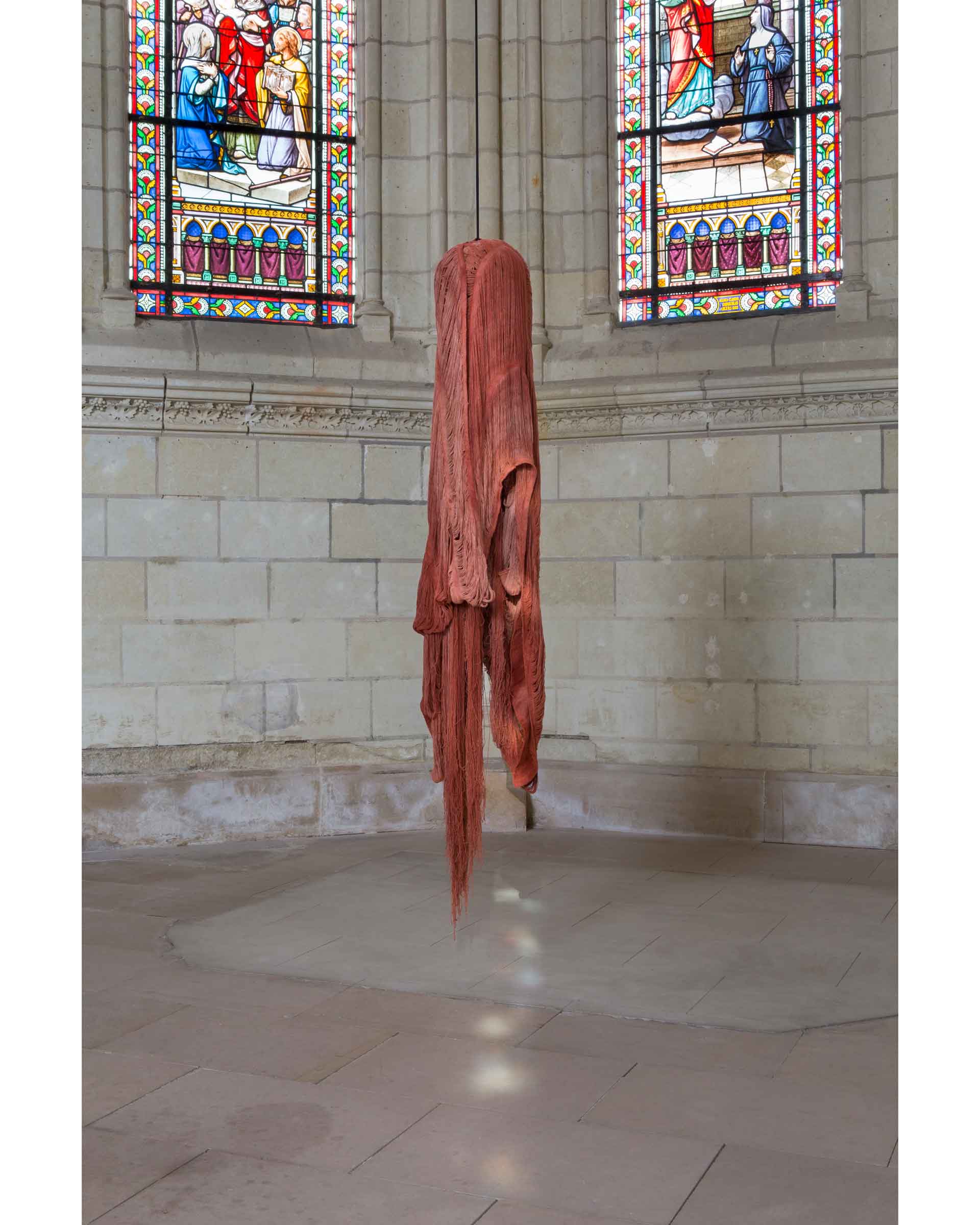
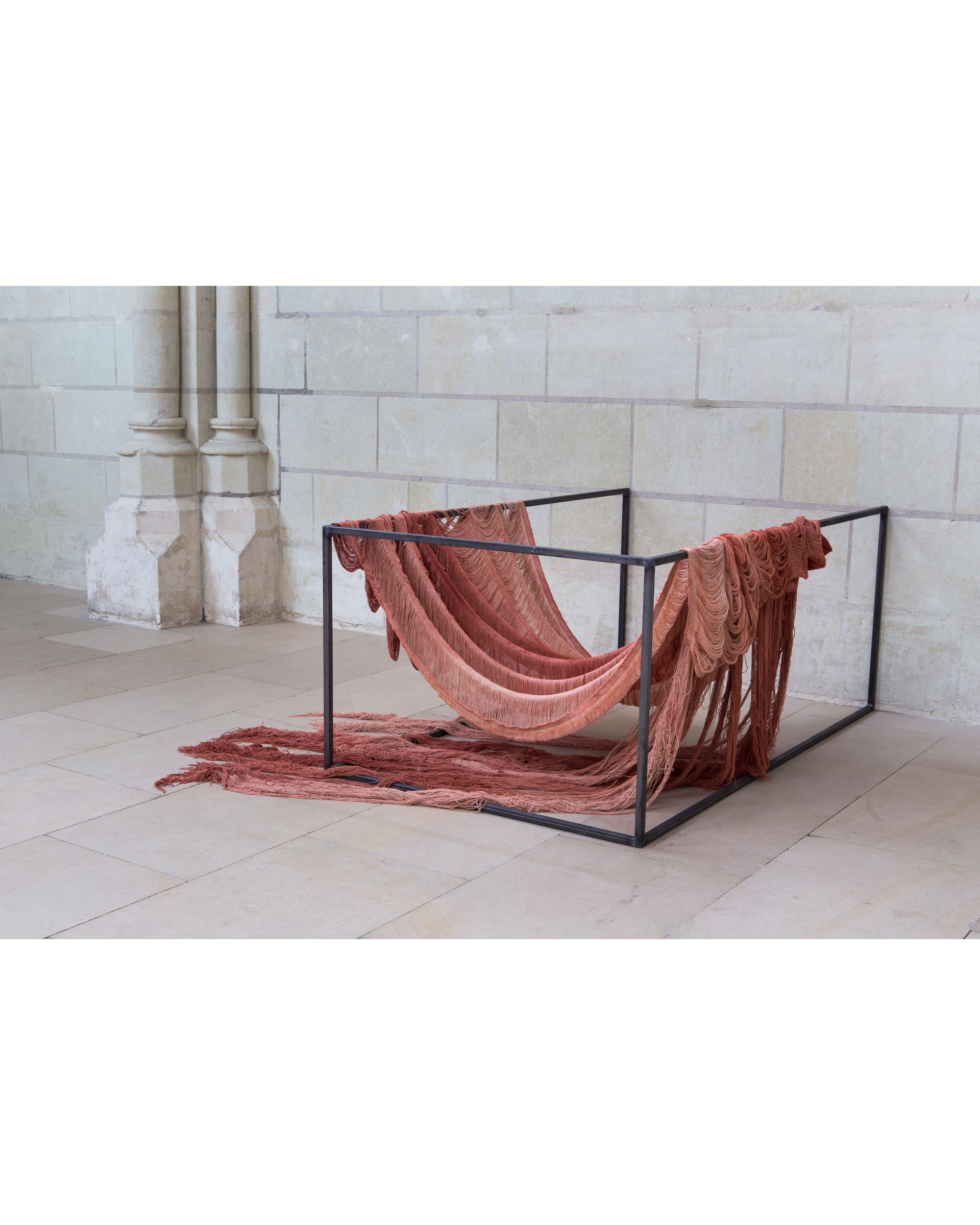
This exhibition, titled À effleurer, se rompre, presents a series of monumental works which made a profound impression during their presentation at the Chapelle Jeanne d’Arc in Thouars.
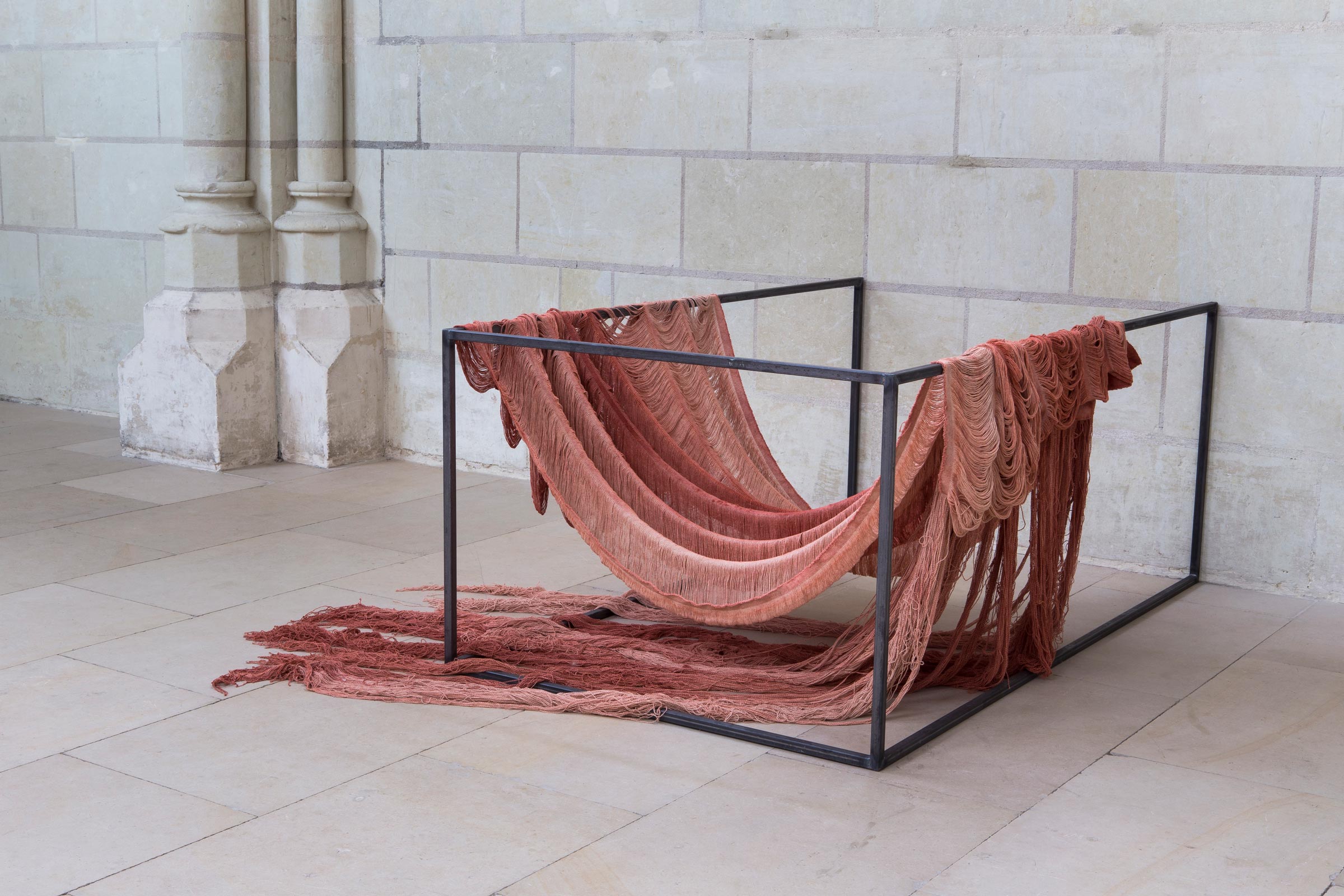
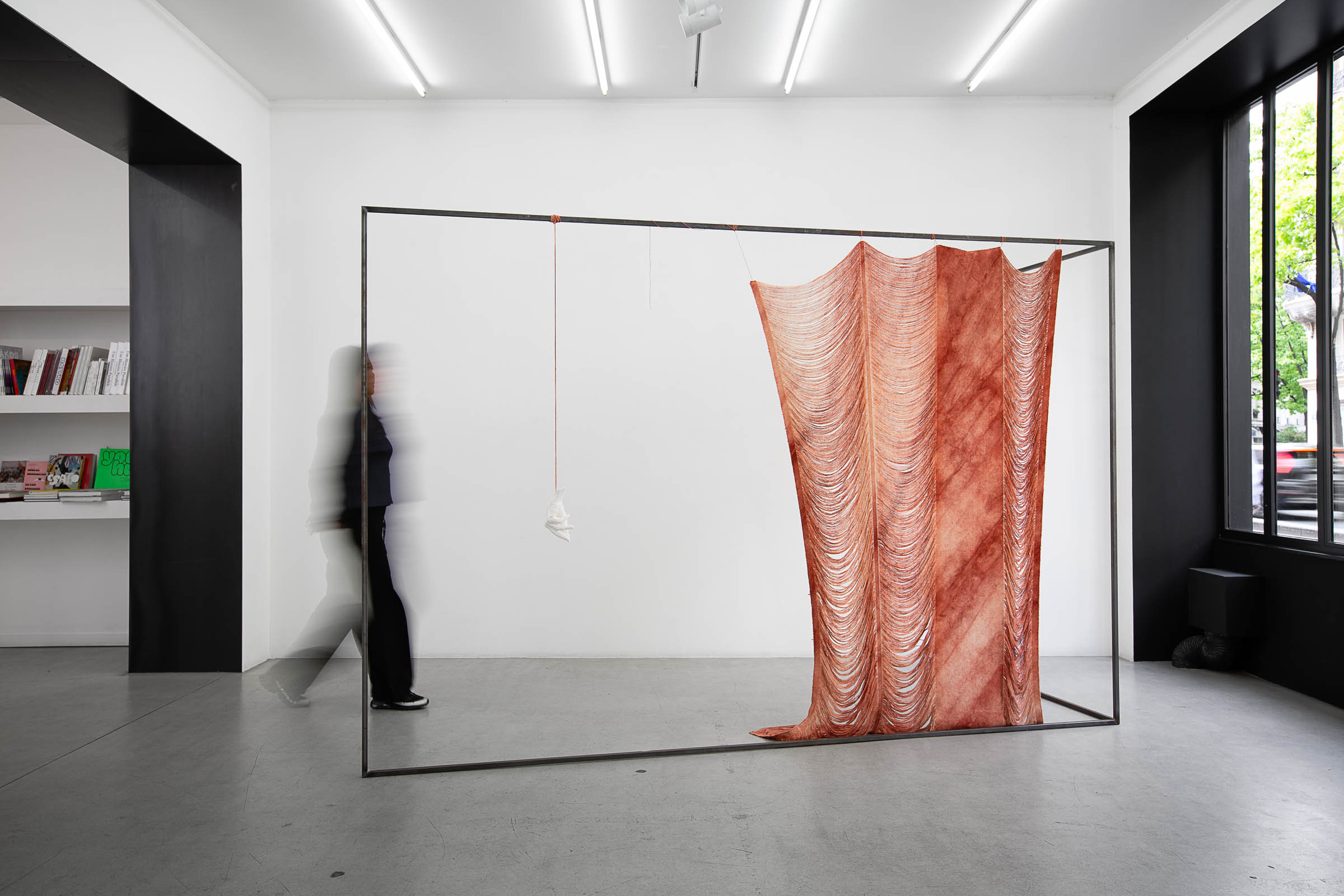
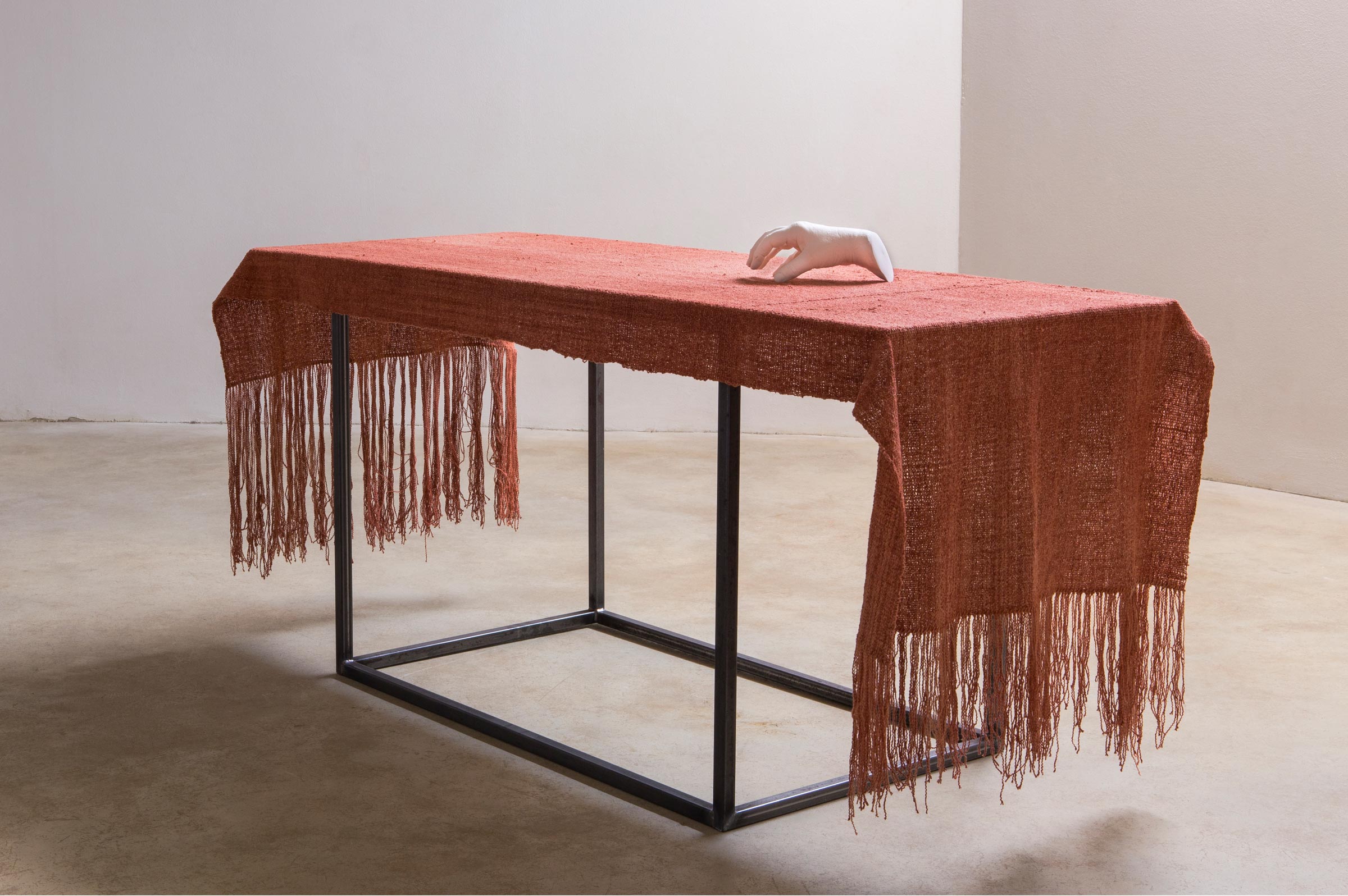
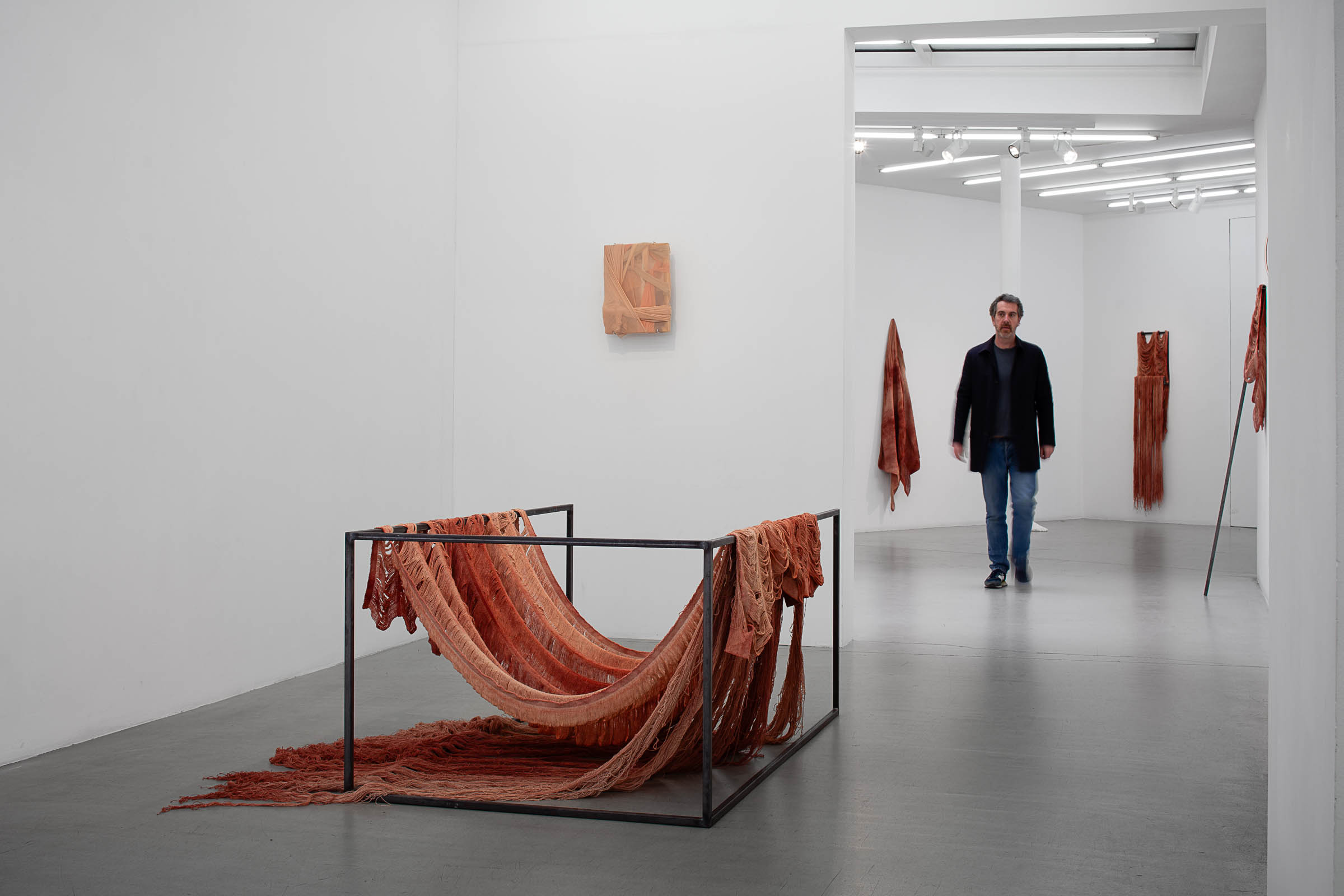
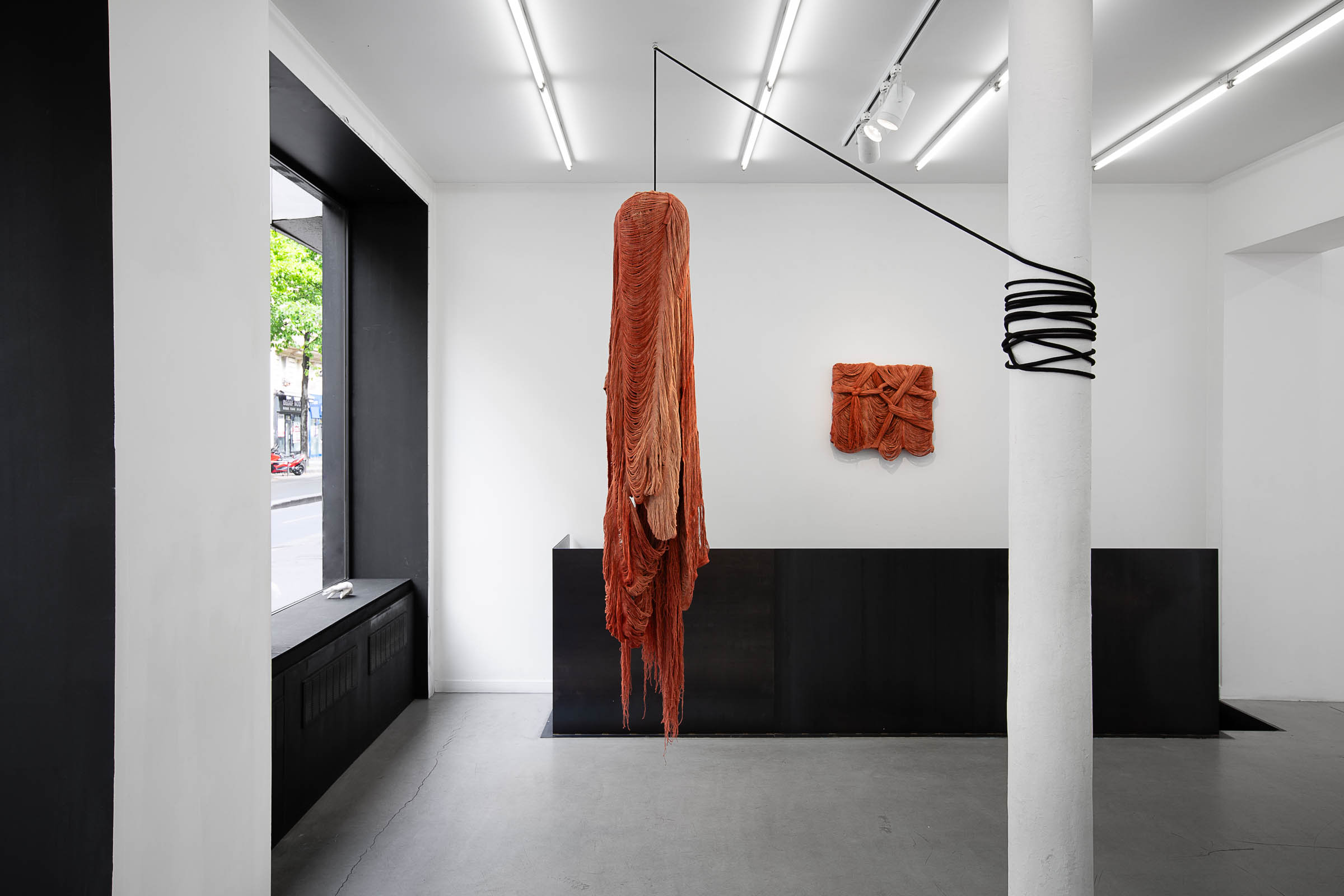
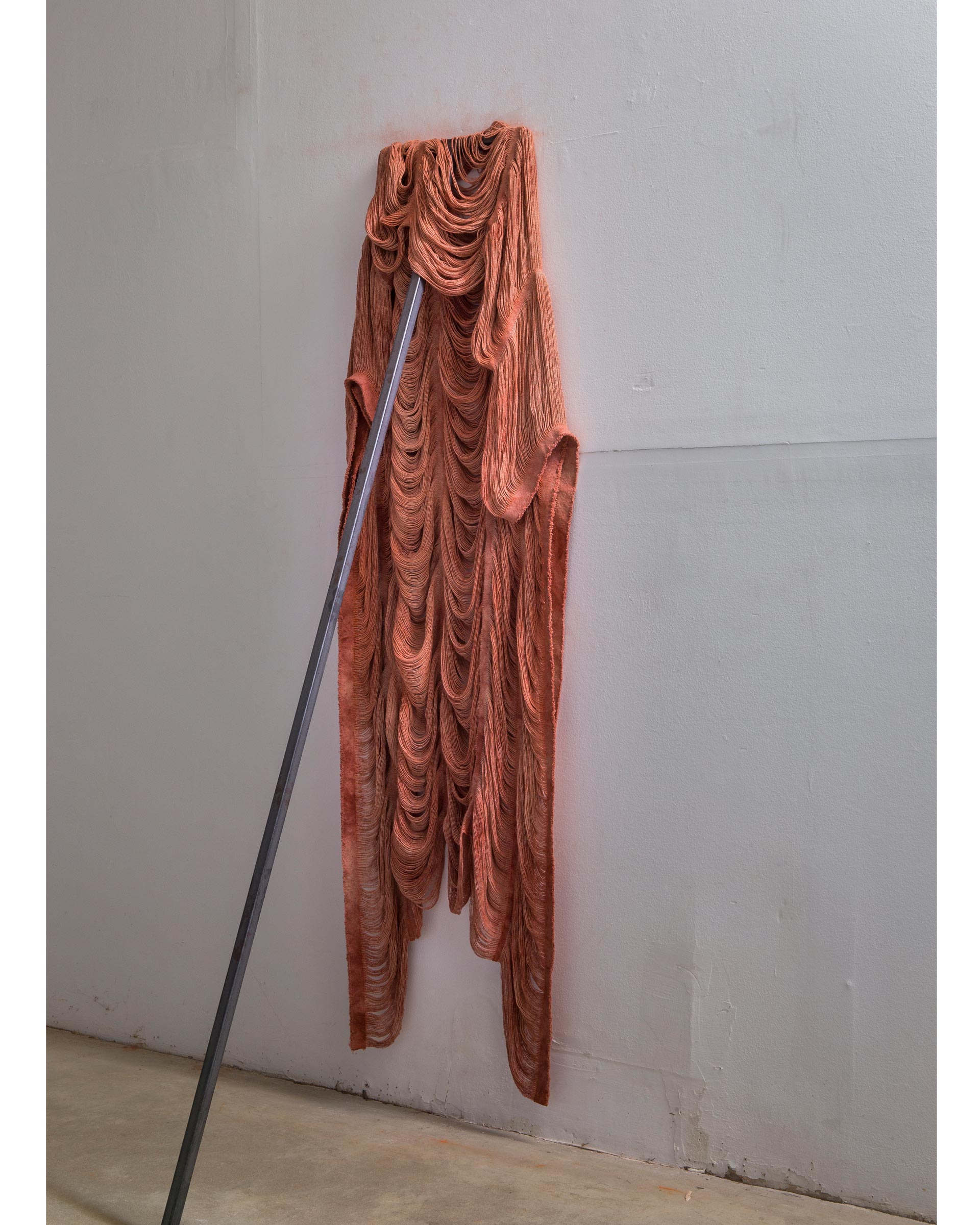
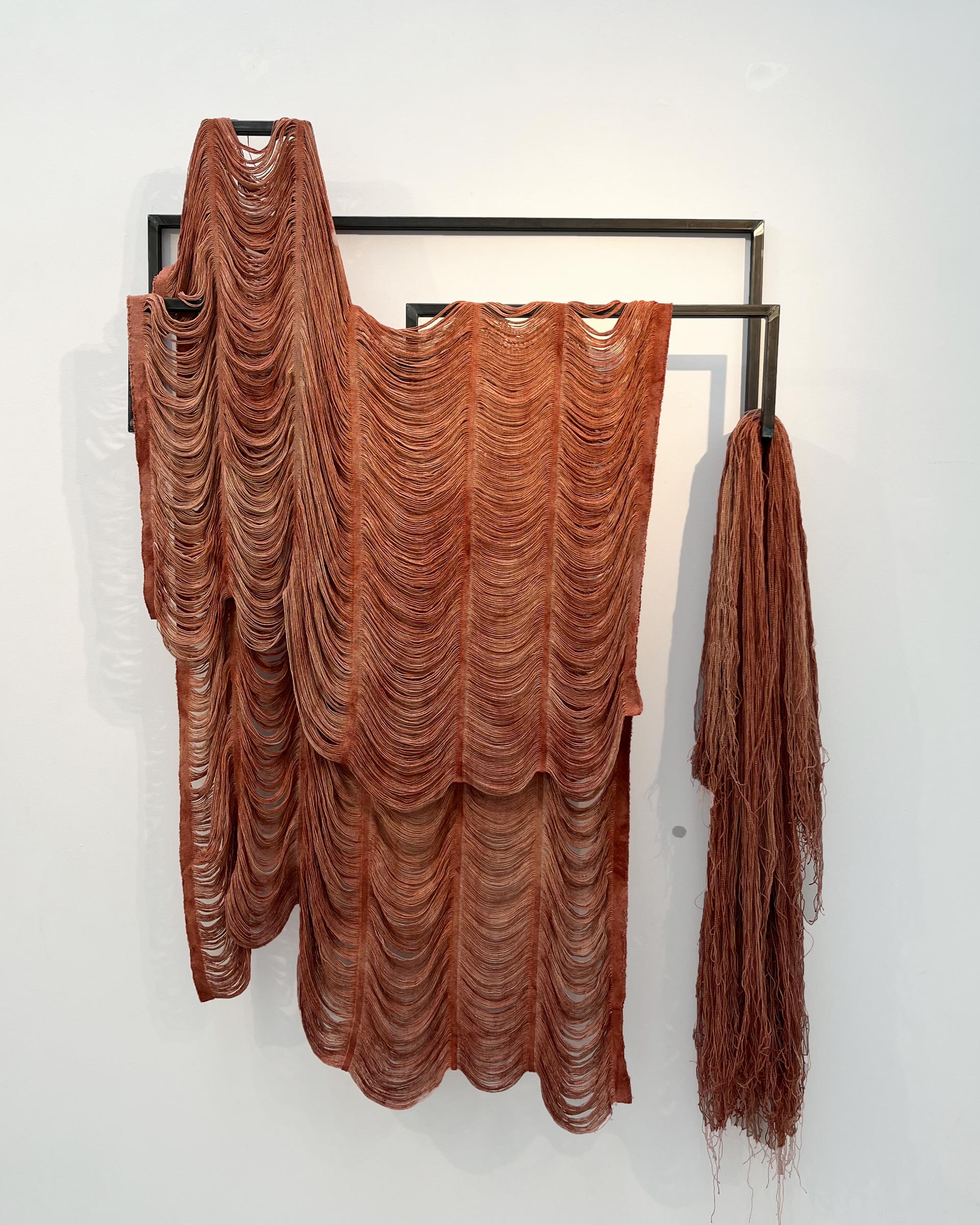
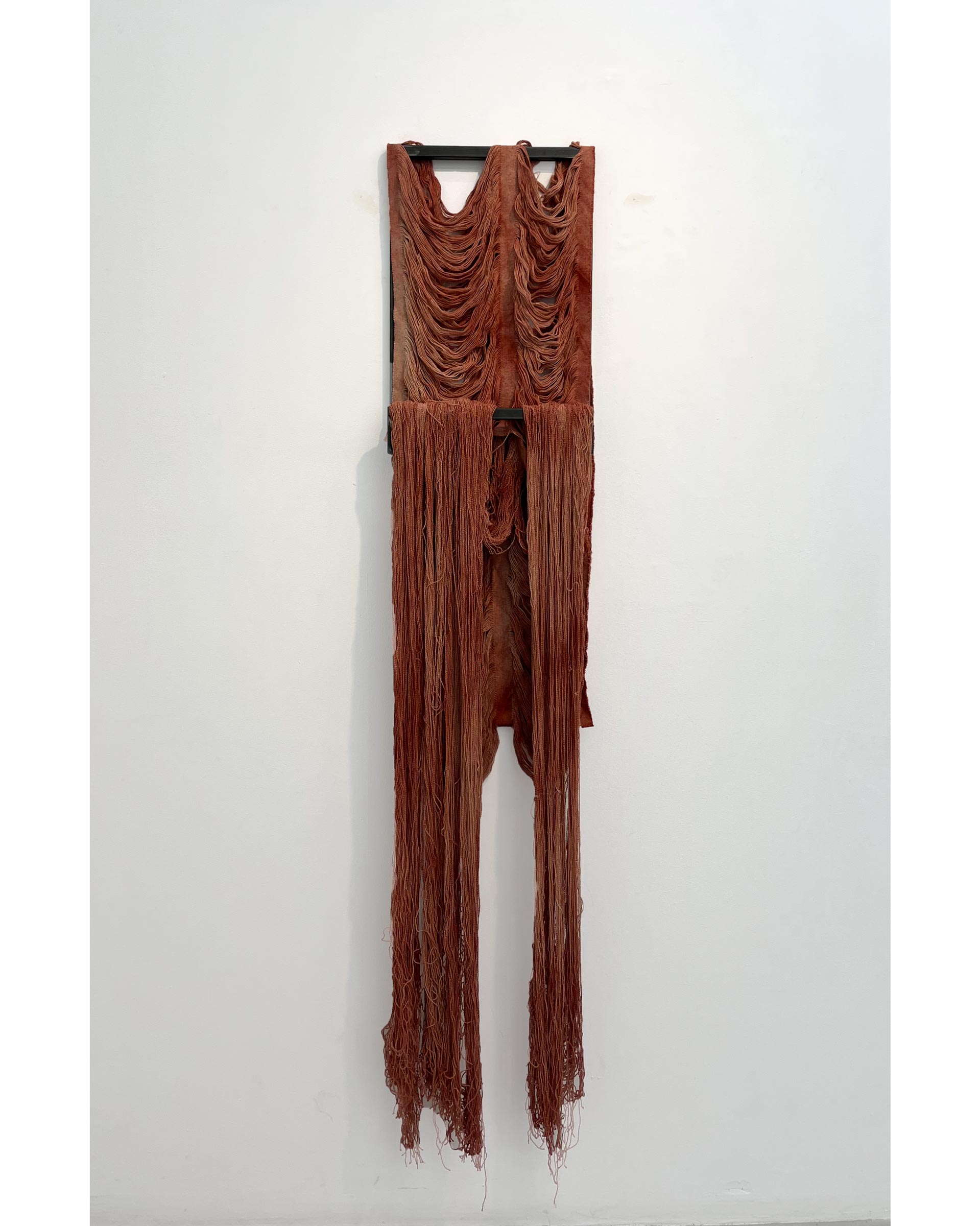
In these works, the act of unweaving is central. Through a meticulous process of subtraction, GolnazPayani removes threads until the very structure of the textile begins to falter. By stripping thefabric of its primary function, whether covering or ornament, she exposes its inherent fragility: the cloth loses its pattern and practical purpose, yet retains its memory. This laborious, almost sacrificial process transforms the textile into a symbolic unveiling, where opacity gives way to a delicate transparency that allows light and the gaze to circulate, turning fiber into something ethereal.
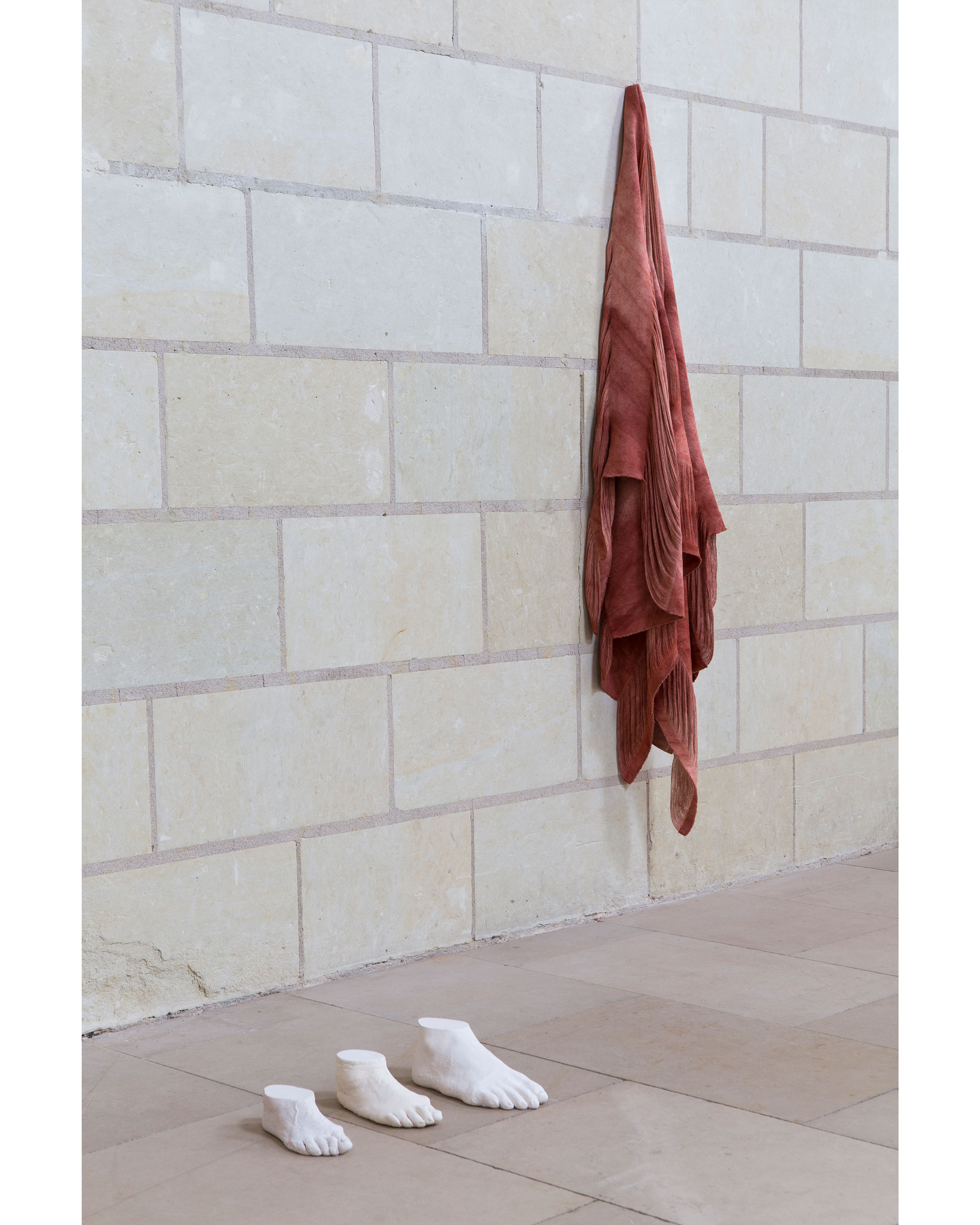
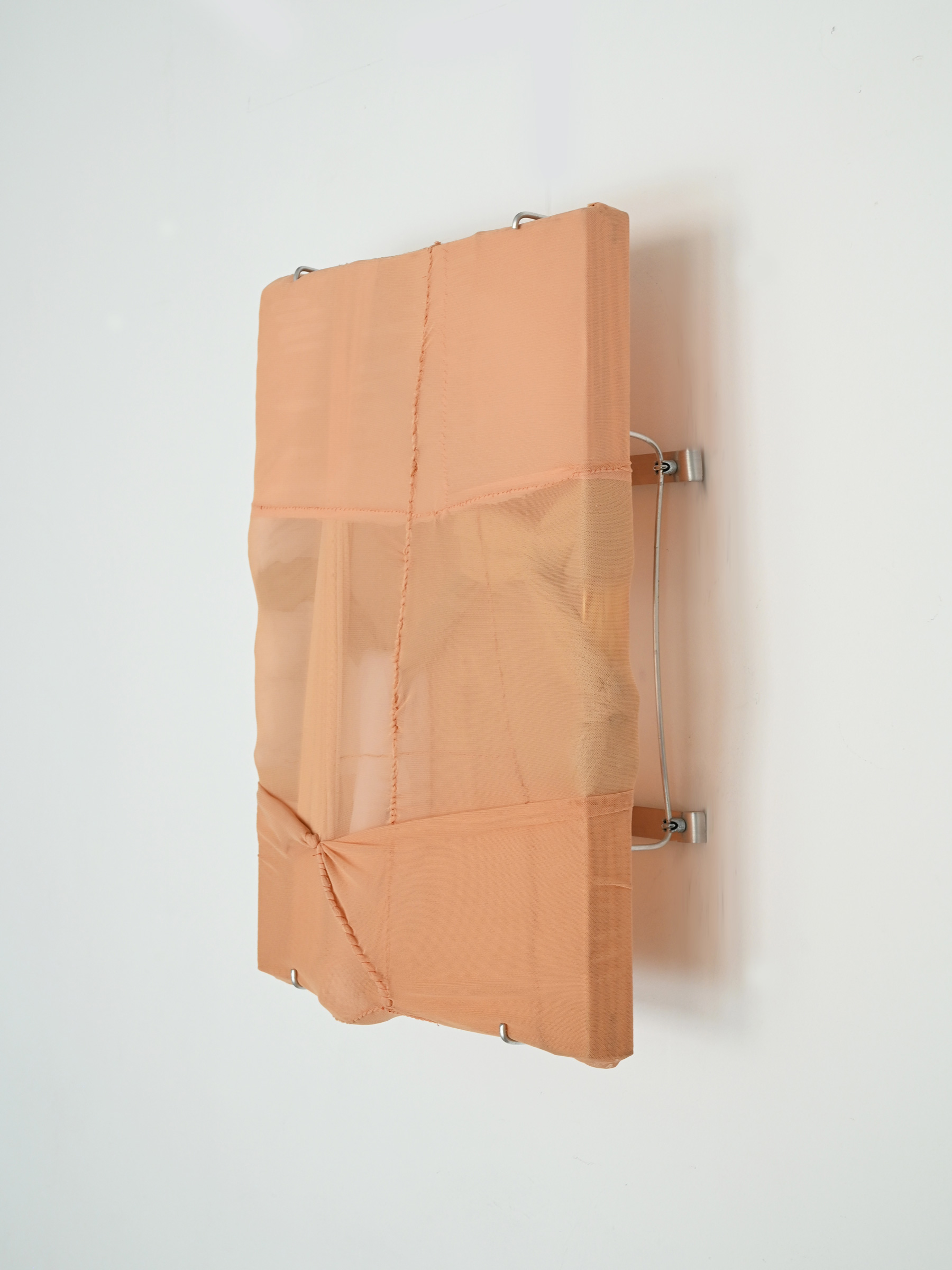
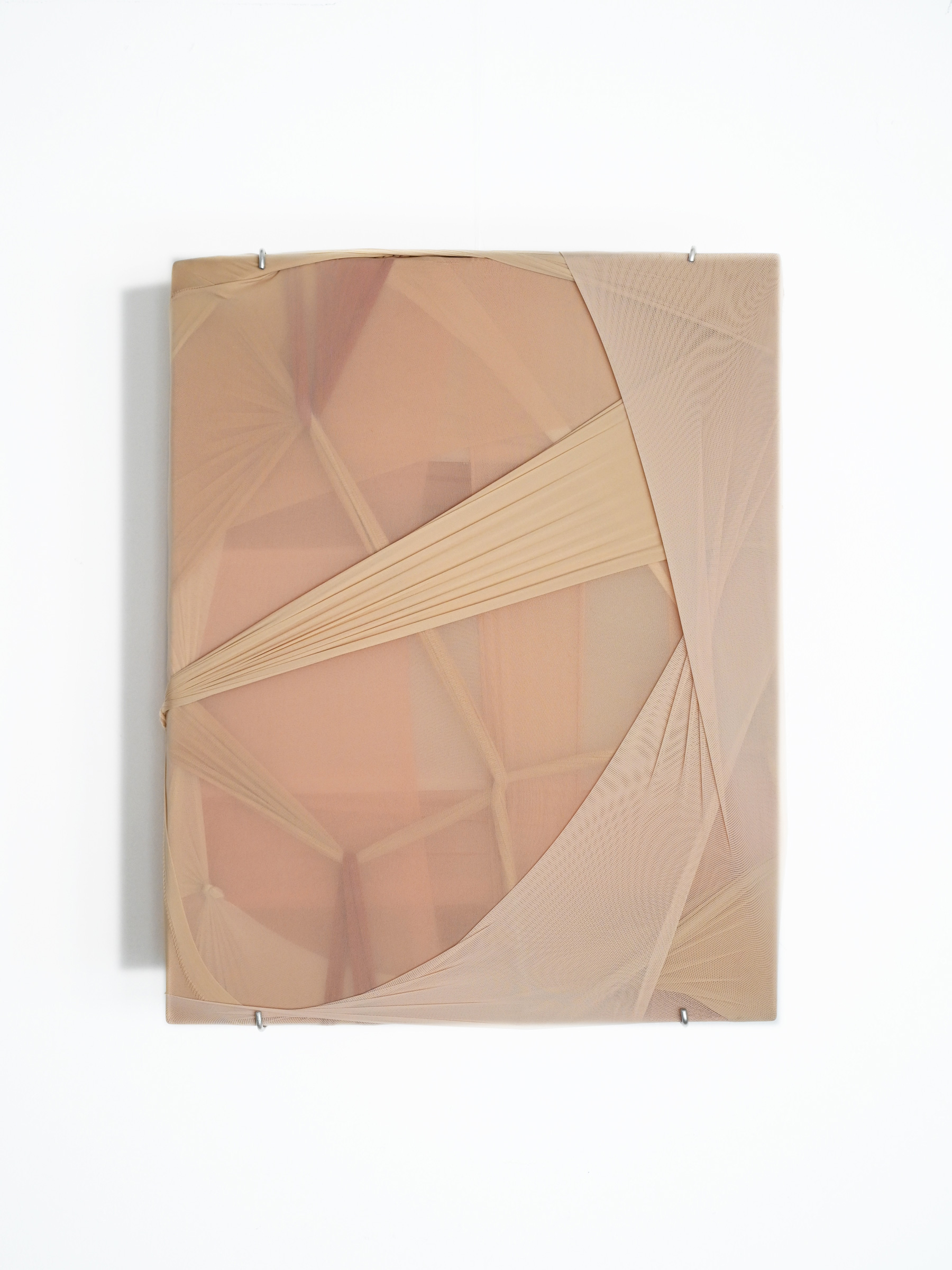
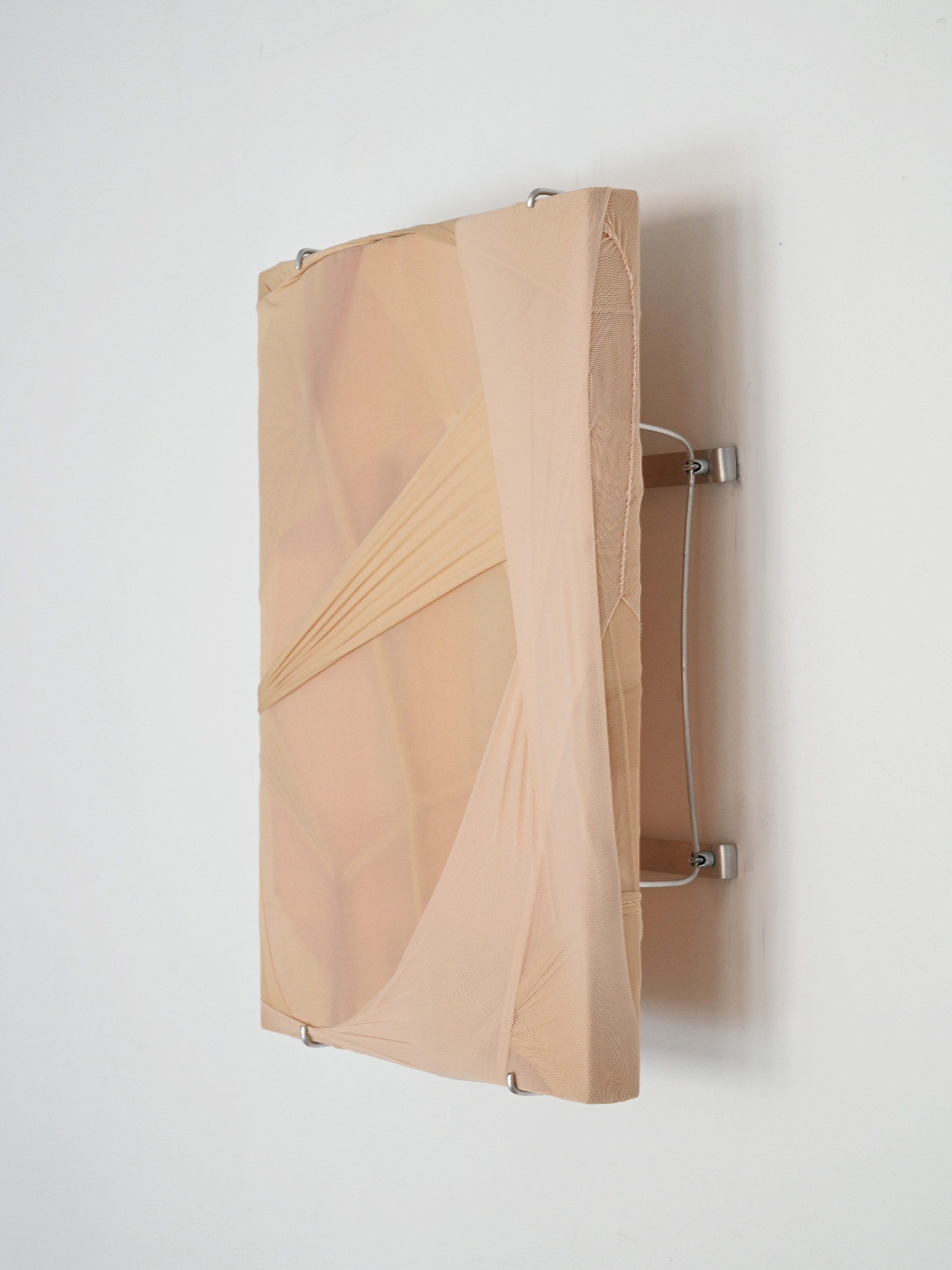
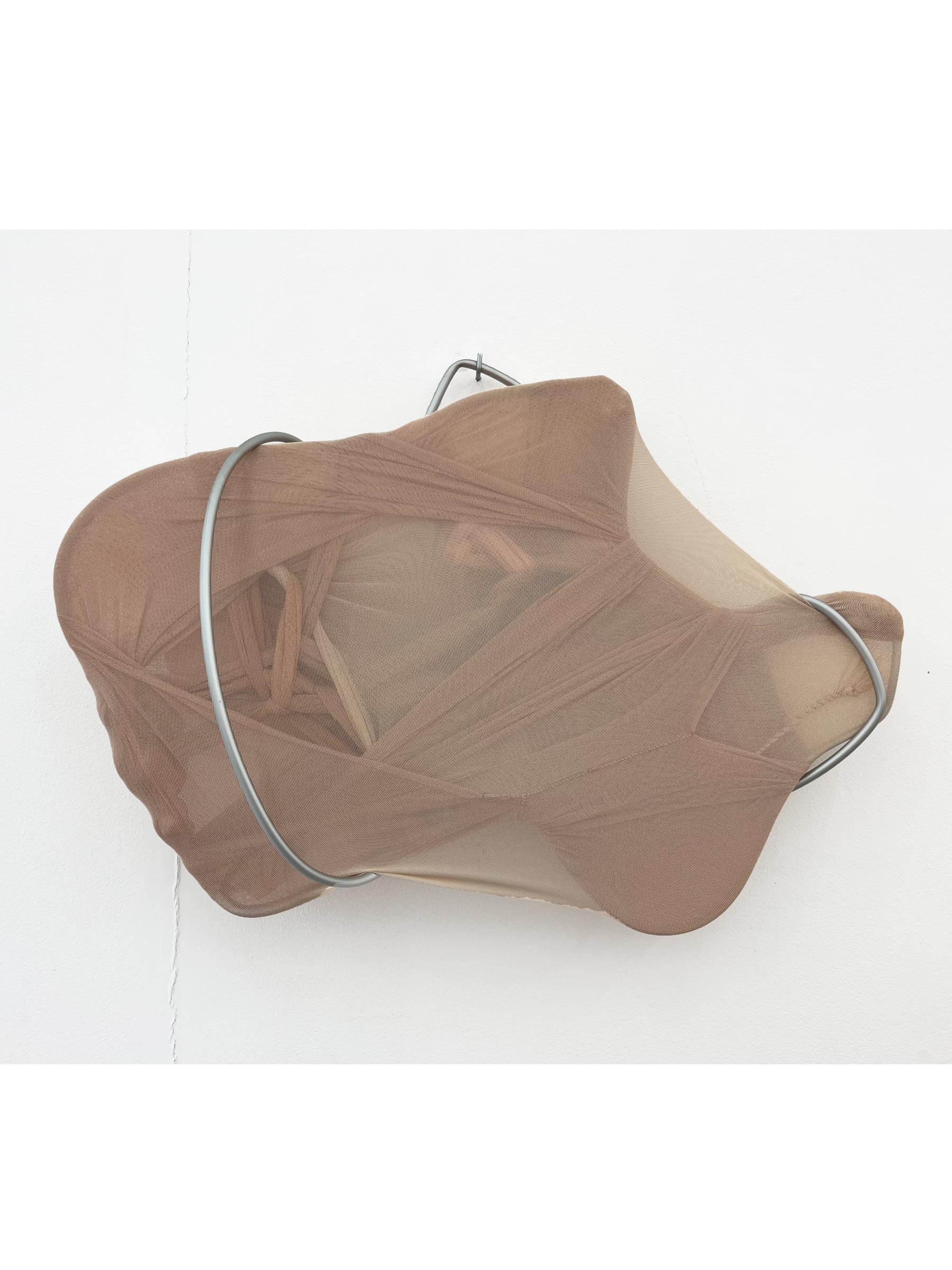
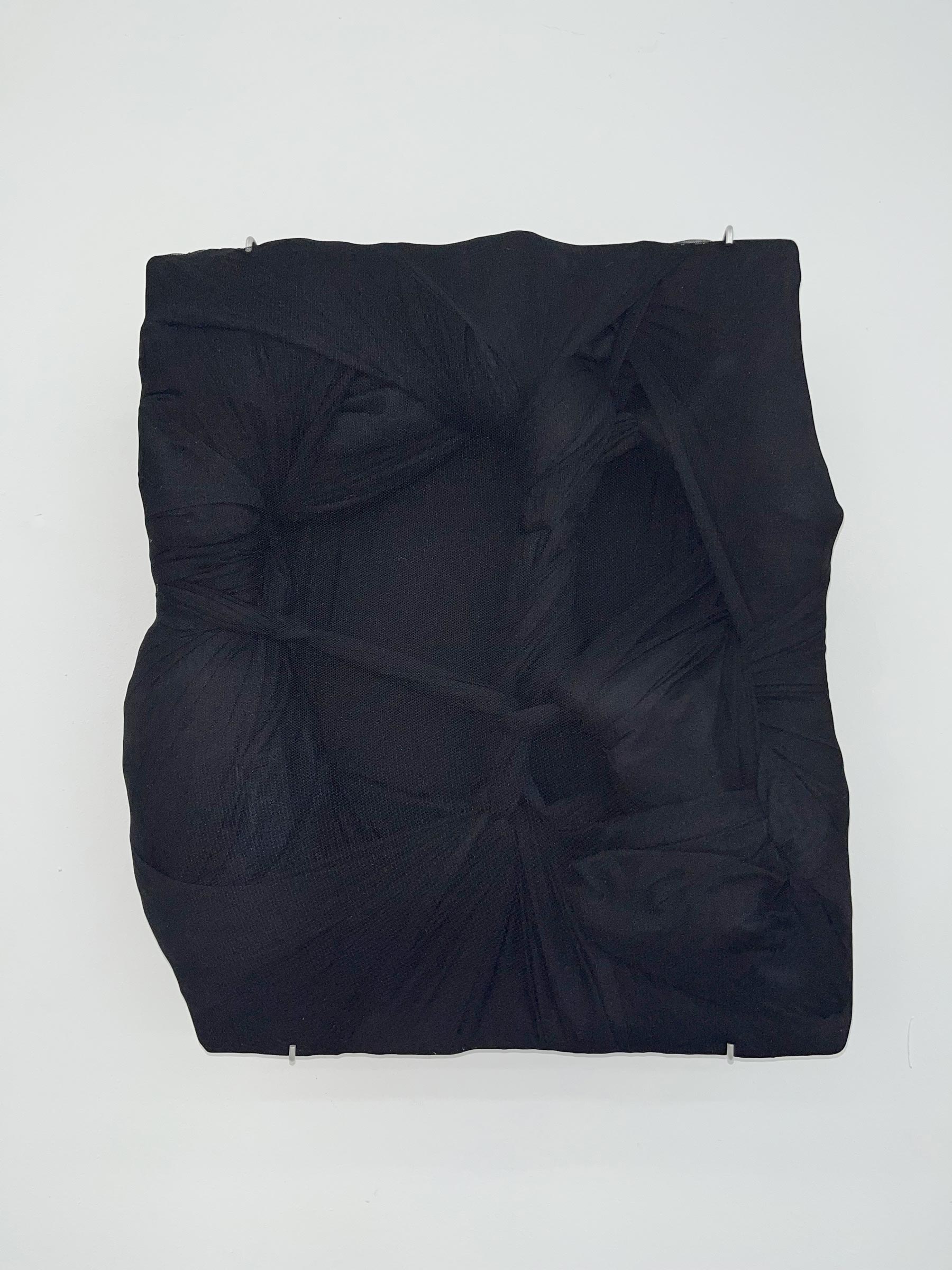
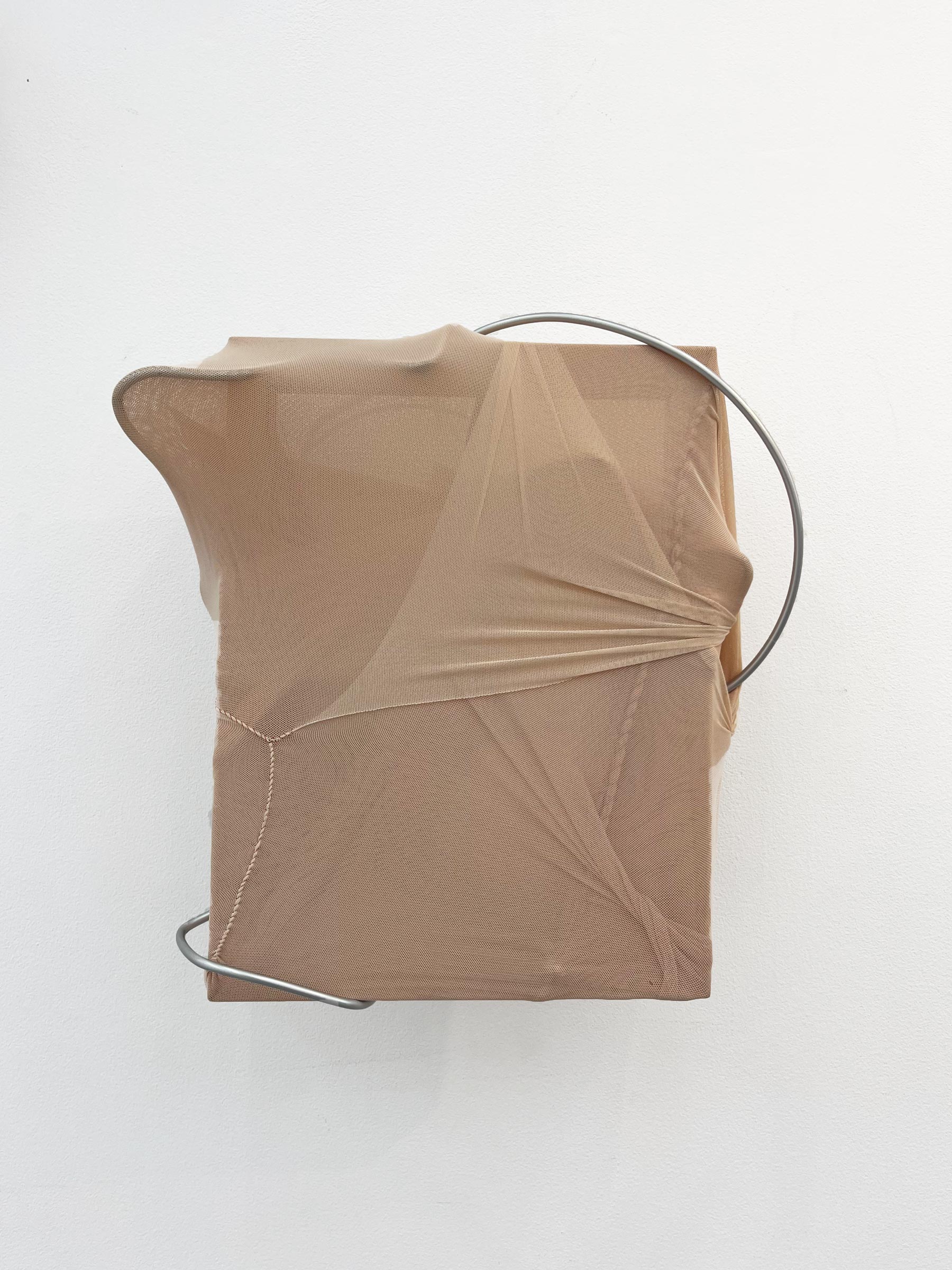
Golnaz Payani’s works occupy the gallery space like textile molts, architectural skins bearing the imprint of a now-absent body. Suspended and diaphanous, they respond to the slightest movement of air, emphasizing the porous boundary between artwork and environment. In this shivering breath, caught between the desire to touch and the fear of breaking, a vibration haunts the exhibition, highlighting the ambiguity of these pieces that inhabit the space like spectral presences, whose very persistence seems to hang by a thread.They act as a second body, a sensitive interface where the remaining threads trace an identity defined by its hollows.
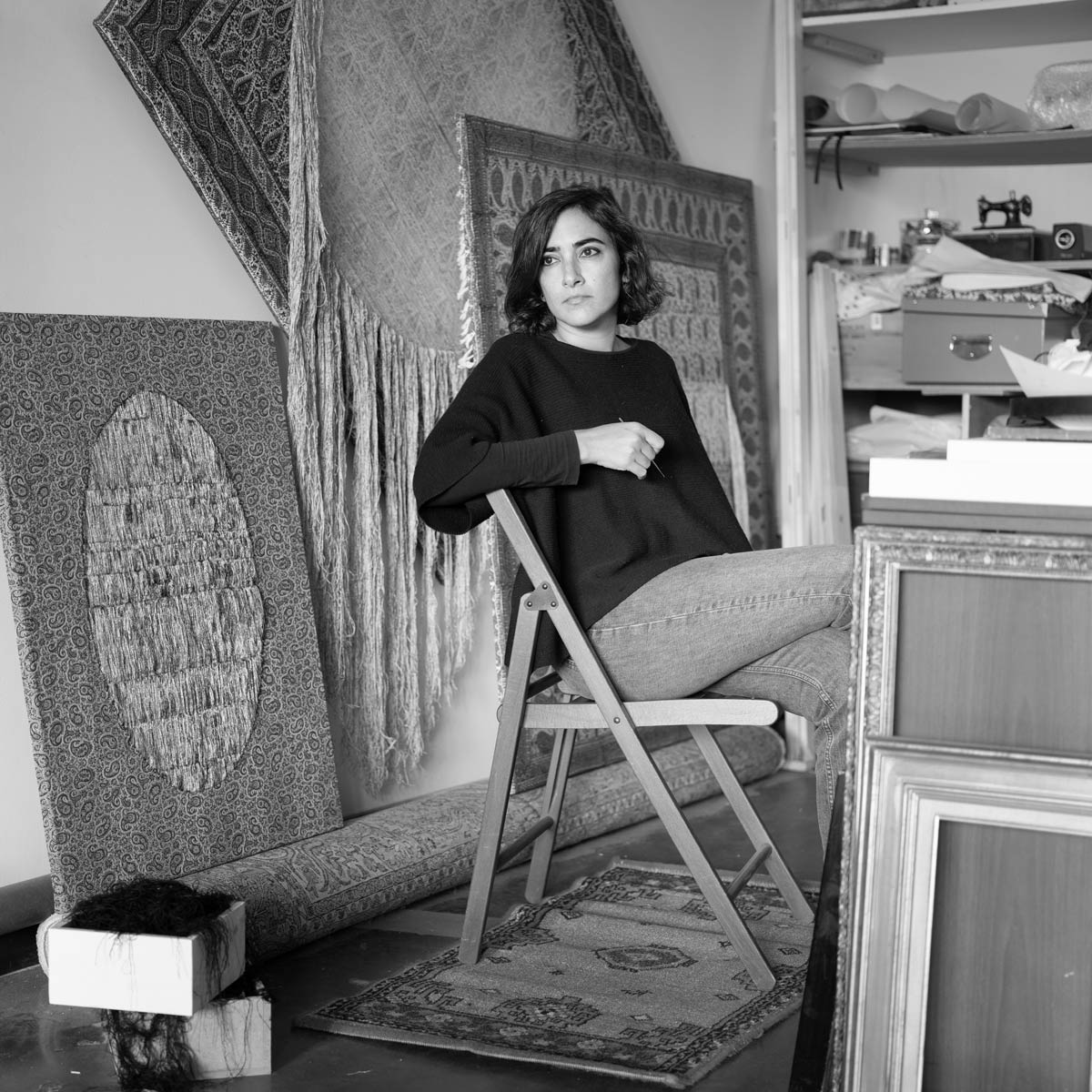
GolnazPayani works across sculpture, installation, film, performance, and poetry, all connected through an exploration of the trace and the threshold of the visible. Shaped by her childhood in Tehran during the Iran-Iraq War and her experience of the compulsory veil in adolescence, she has transformed her relationship with textiles: once a toy, then a symbol of oppression, they have become a medium of liberation in her practice.
For GolnazPayani, art is about giving tangible form to inherited absences and silences. Her work does not simply document the past; it grants autonomy to that which has vanished. She transforms exhibition spaces into places of contemplation, where the gestures of the hands and the symbolism of color become a language capable of preserving the essence of memories otherwise destined for oblivion.
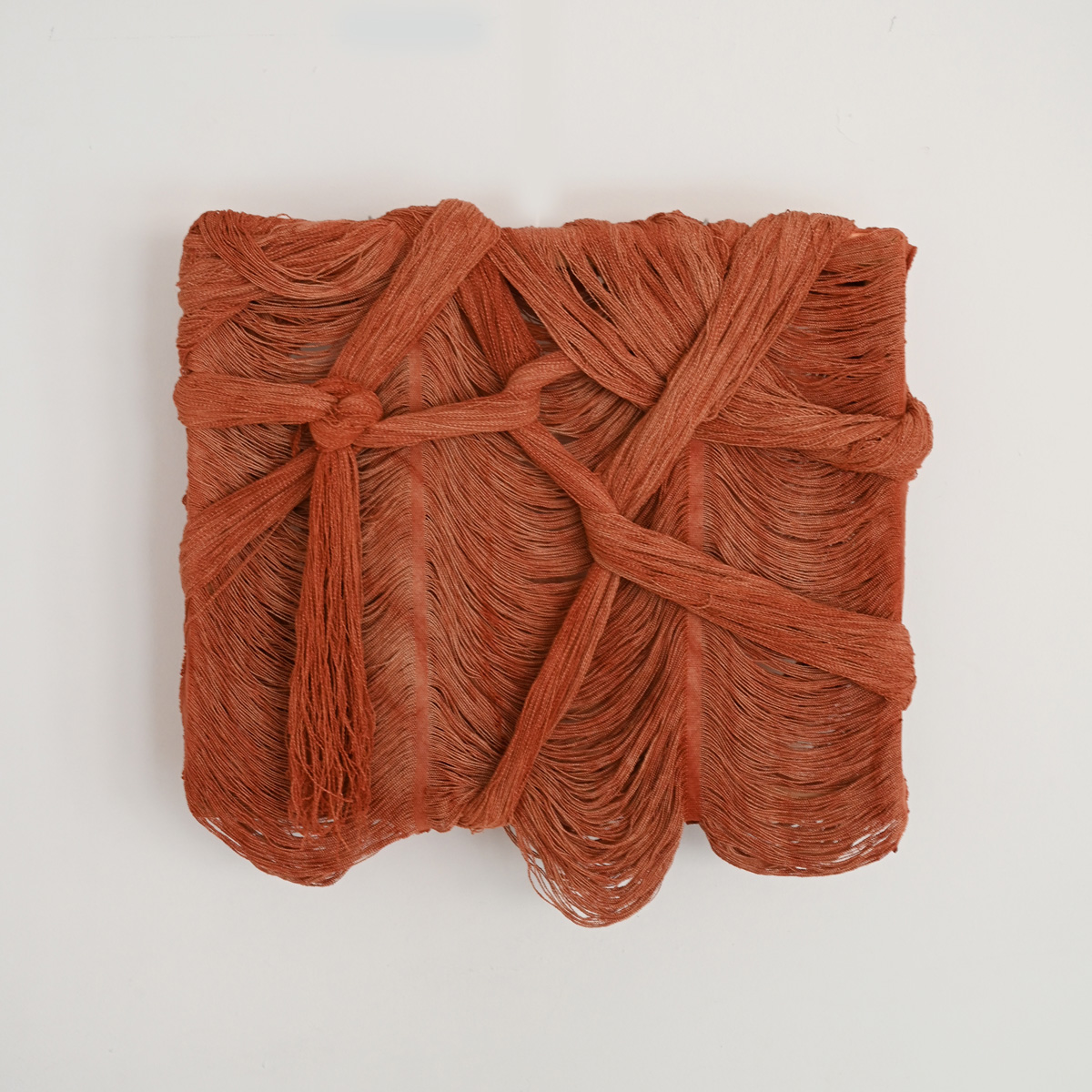
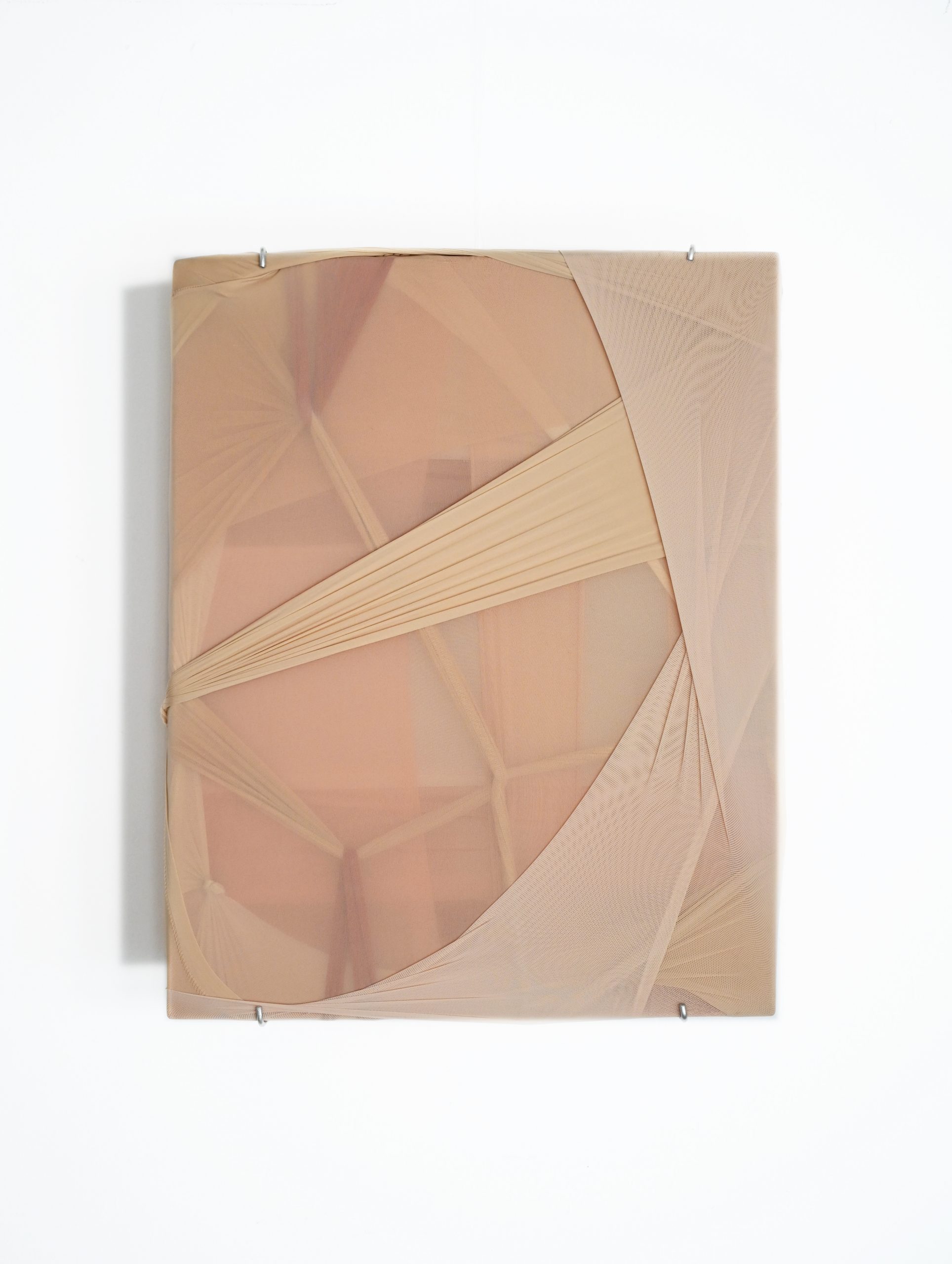
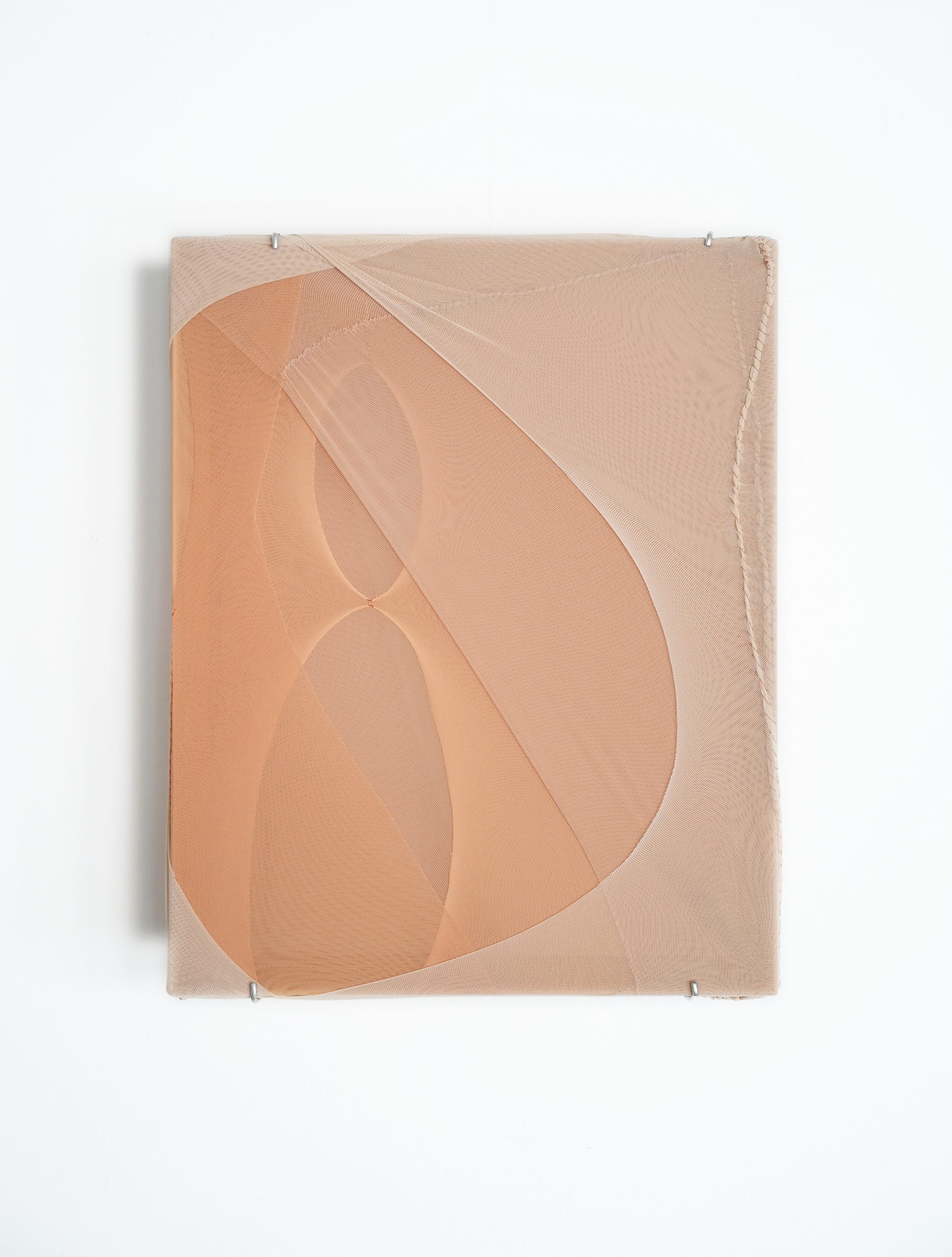
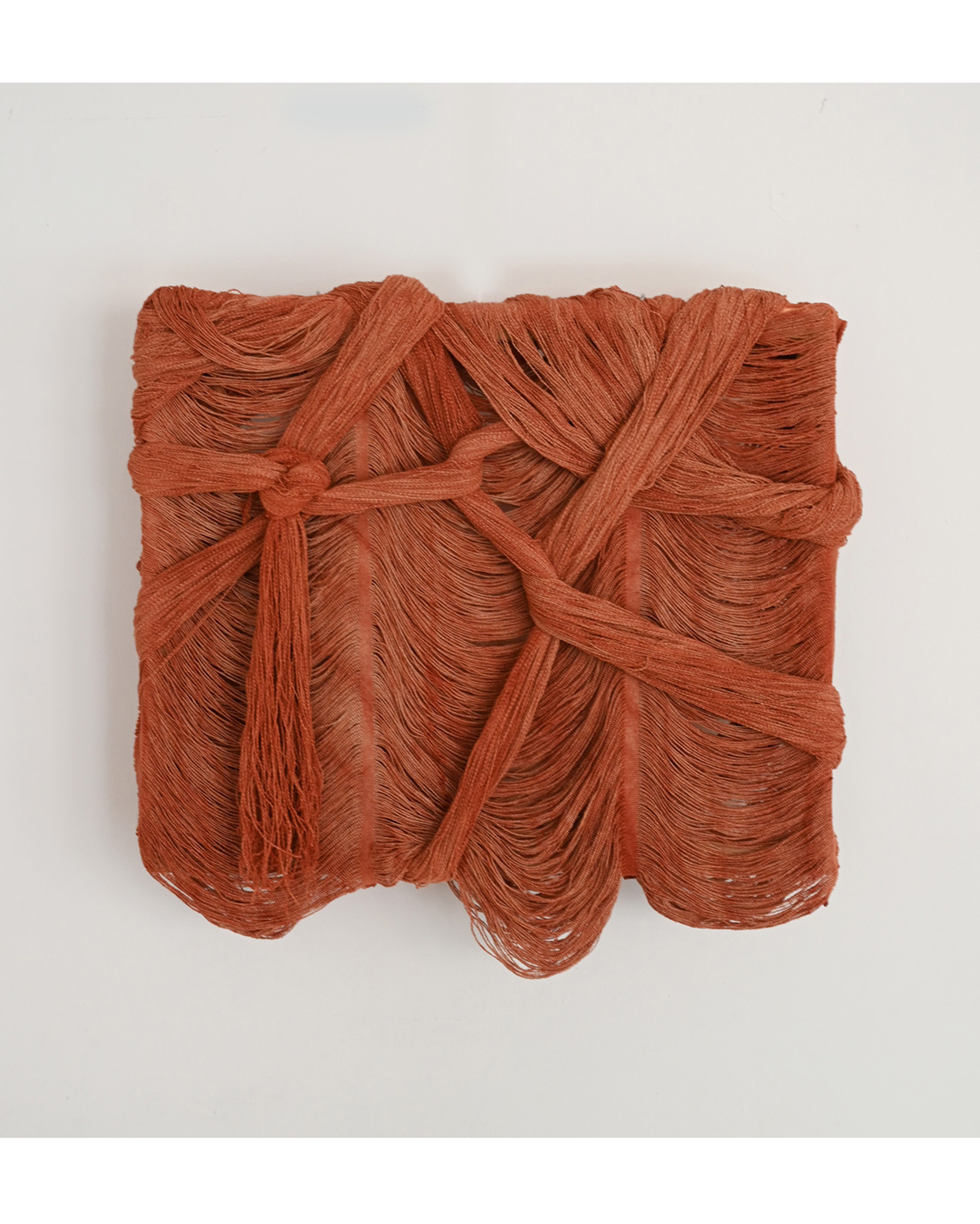
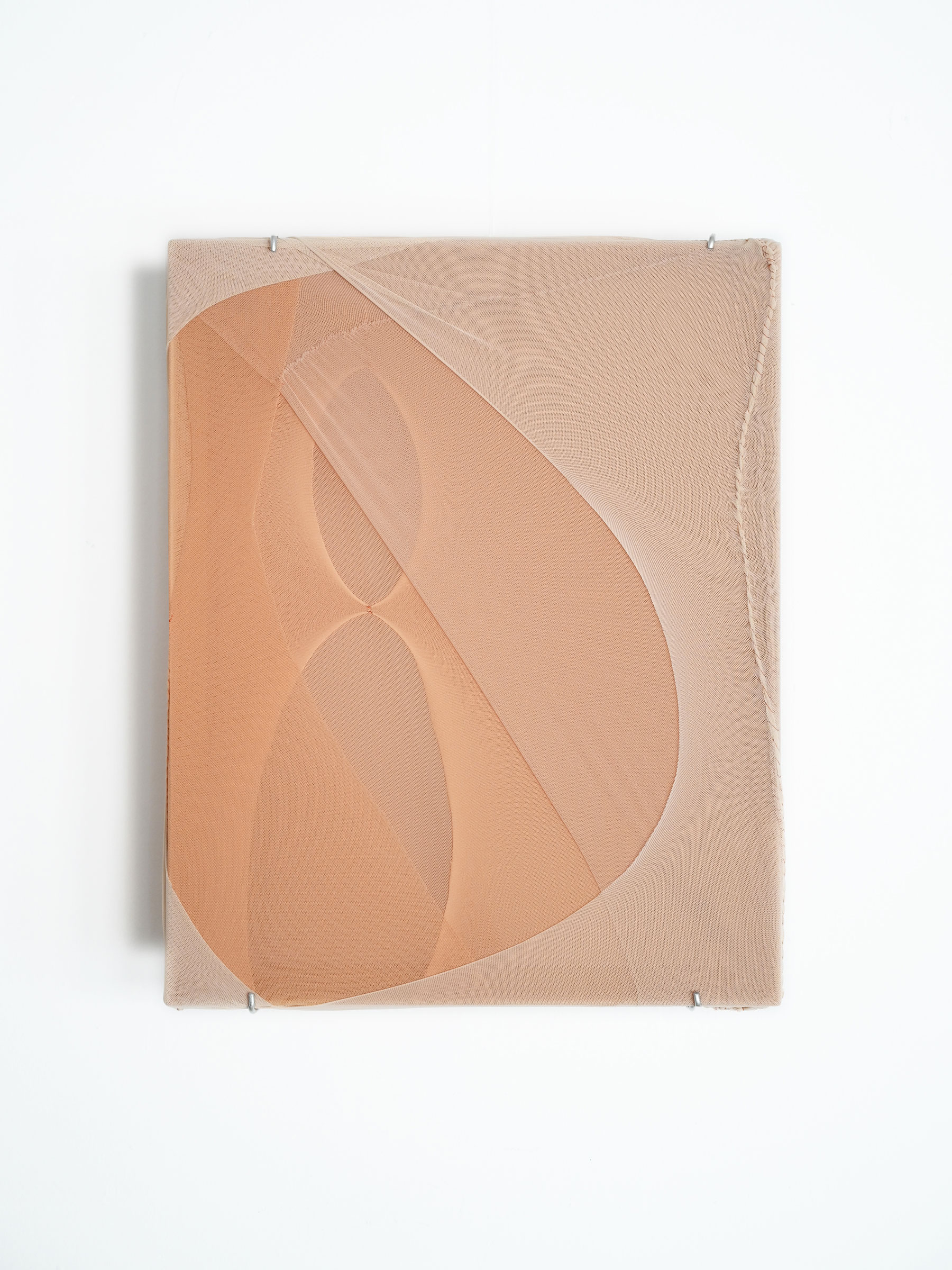
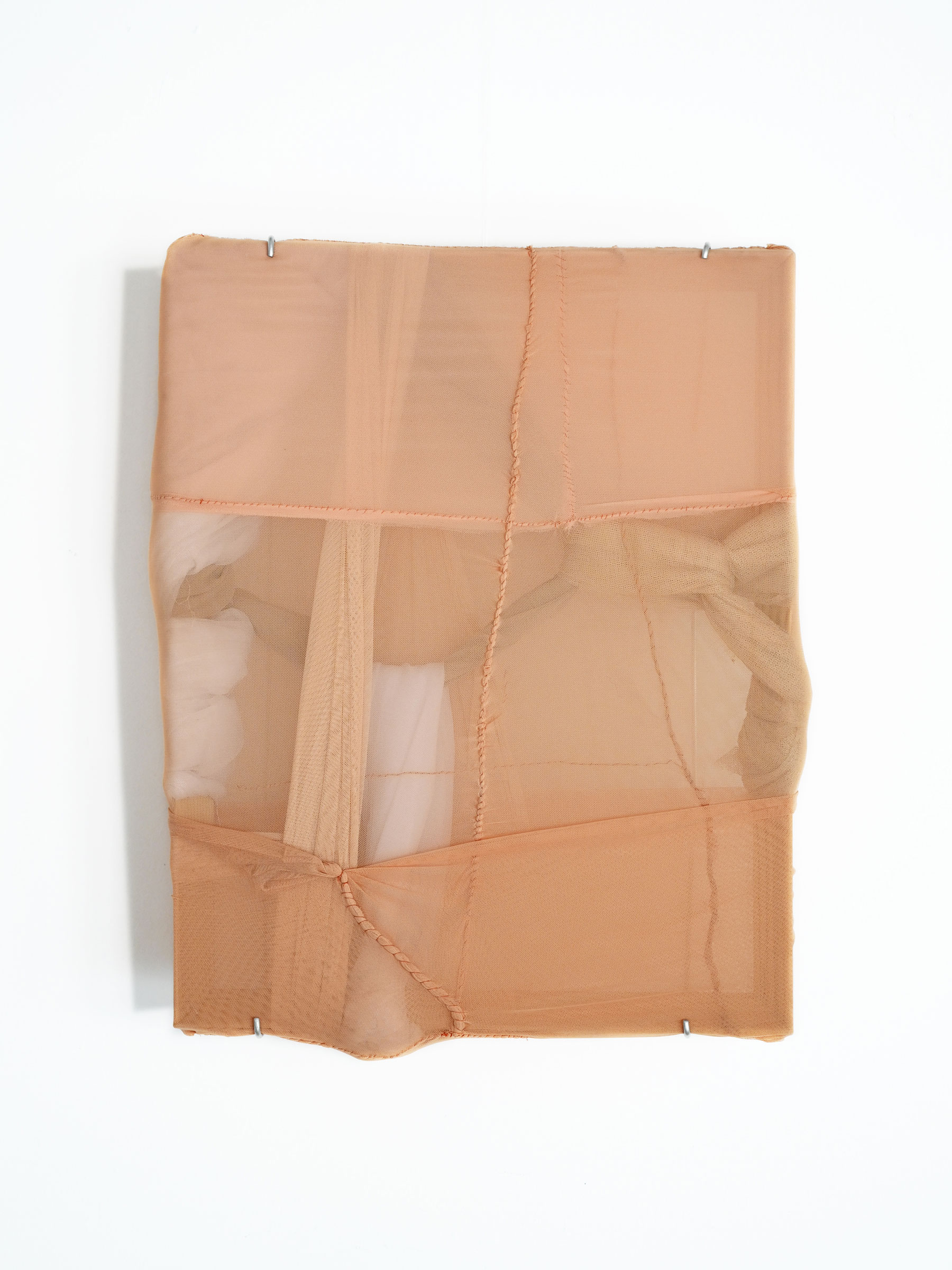
Golnaz Payani, Toujours, à travers 01, 2026, Fabric, wood and metal, 50 x 40 cm
Après la peau, le temps s’arrête. Sans elle, tout s’effondre. Plus rien ne tient droit, Plus rien ne s’y agrippe.
Après la peau, il n’y a plus personne. Ni moi, ni toi, il ne reste qu’un amas de chair. Après la peau, qui fera la différence ? Après la peau, il faut accepter la défaite.
One might say that Golnaz Payani now treats skin—or the beyond-skin (as one speaks of the beyond-the-grave)—as a matter of life or death… of forms, of their memory, and of their agency within reality […]. It is thus symptomatic that from a work centered on the unweaving and unframing of painting, tapestry, or embroidery—delimited spaces inherited from the Fine Arts system—she has moved toward the flaying of the body and its skin, tormented by the obsession to probe their own entrails.
Born in Tehran in 1986, Golnaz Payani studied at the Faculty of Art and Architecture in Tehran and at the École d’art de Clermont-Ferrand (DNSEP, 2013). A multidisciplinary artist, her work has been shown in numerous institutions in France and abroad, notably at the Chapelle Jeanne d’Arc in Thouars. Her move to France in 2009 marks a continuous pursuit of making the immaterial palpable. She lives and works between Paris and Madrid.